 Spicy Trip

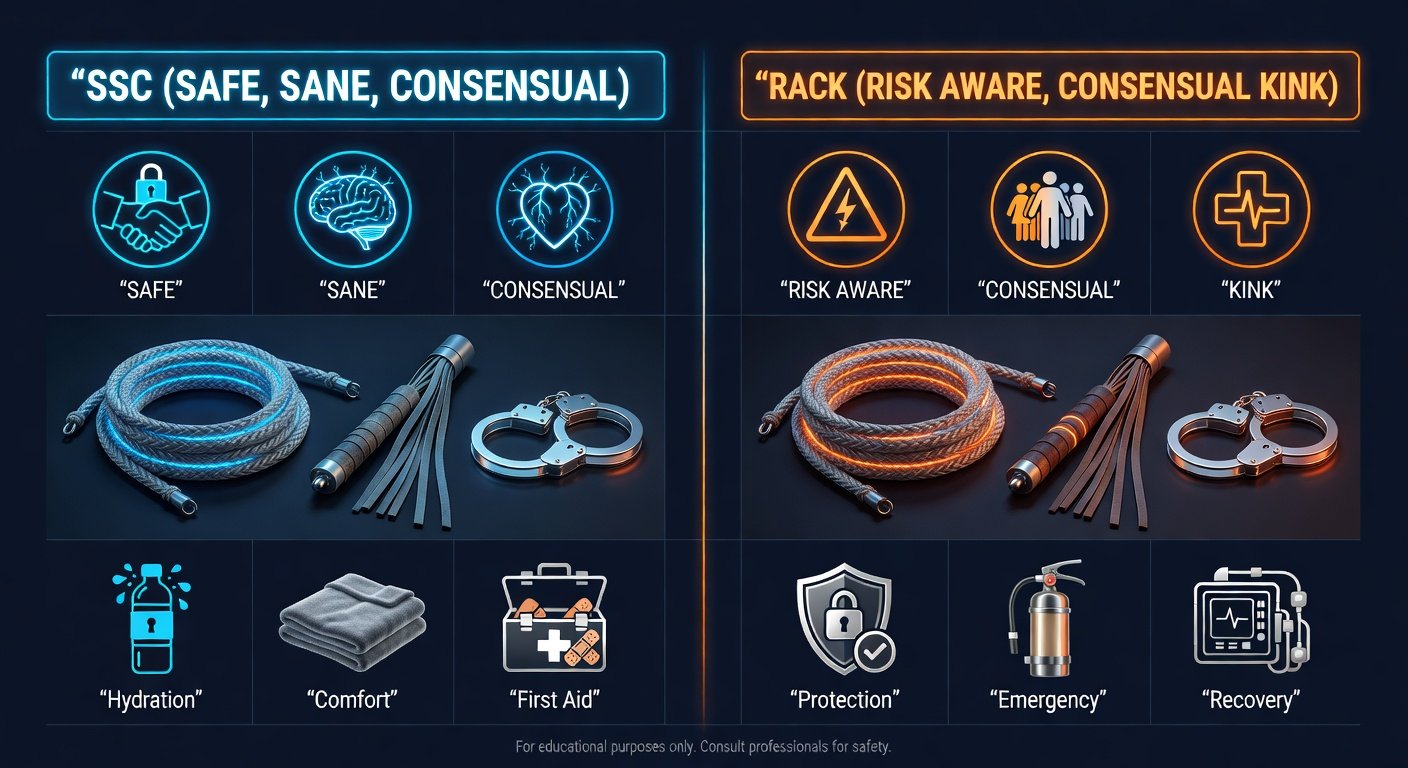
Understanding BDSM Safety Philosophies: SSC vs RACK
In the world of BDSM, safety isn't just a buzzword—it's the foundation of ethical, enjoyable play. Two dominant philosophies guide practitioners: SSC (Safe, Sane, Consensual) and RACK (Risk-Aware Consensual Kink). Whether you're a beginner exploring ropes and floggers or a seasoned player pushing boundaries, understanding these frameworks ensures everyone walks away fulfilled and unharmed. This guide compares their origins, key differences, practical applications, and how to choose one for your scenes, including aftercare and tool use. We'll also cover 2026 community updates for cutting-edge best practices.
Origins of SSC: The Traditional Standard
SSC emerged in the late 1970s from the leather and BDSM communities in the U.S., particularly through organizations like the Gay Male S/M Activists (GMSMA). It was popularized in the 1980s as a response to mainstream misconceptions and legal scrutiny, emphasizing three pillars: Safe (physical and emotional risk minimization), Sane (rational, sober decision-making), and Consensual (explicit agreement from all parties).
SSC became the gold standard for public education, helping normalize kink by framing it as responsible adult behavior. It's ideal for beginners, providing clear boundaries that prioritize absolute safety. For instance, under SSC, activities like breath play are often off-limits due to inherent dangers.
The Rise of RACK: Embracing Informed Risk
RACK, coined in the early 2000s by Gary F., founder of FetLife, acknowledges that all kink involves some risk. It shifts focus to Risk-Aware (participants understand and mitigate known risks) and Consensual Kink (ongoing, informed consent). RACK critiques SSC's absolutism, arguing that "safe" is relative—even vanilla sex carries risks like STIs.
This philosophy gained traction online, appealing to edge players who engage in high-risk activities like fire play or needle play, provided risks are researched, communicated, and managed.
Key Differences Between SSC and RACK
- Safety Absolute vs. Relative: SSC demands no-risk activities; RACK accepts calculated risks with mitigation strategies.
- Mindset: SSC stresses emotional sanity (no play while intoxicated or in distress); RACK focuses on education and negotiation for risk awareness.
- Scope: SSC suits low-risk basics like light bondage; RACK covers advanced scenes.
- Consent Depth: Both prioritize consent, but RACK emphasizes dynamic, revocable agreement. For more on consent foundations, check Planned Parenthood's sexual consent guide.
Practical Applications: BDSM Tools and Safe Play
Applying these philosophies to real scenes makes the difference between thrill and trauma. Start with negotiation: Discuss limits, safewords (e.g., red/yellow/green), and medical history.
Using BDSM Tools Under SSC
- Ropes and Bondage: Use quick-release ties, check circulation every 5-10 minutes. Avoid neck compression.
- Floggers/Impact Toys: Target fleshy areas (thighs, butt); start light, monitor for bruising.
- Safeword Enforcement: Mandatory halt on "red."
For SSC, stock a first-aid kit with shears, bandages, and antiseptic—always within reach.
RACK in Action for Advanced Play
With RACK, research is key. For edge play like knife play:
- Assess risks: Infection, cuts, psychological triggers.
- Mitigate: Sterilize blades, use check-ins, have blood-borne pathogen training.
- Debrief post-scene.
Example: A couple using violet wands (electric play) under RACK studies voltage risks via community resources, agrees on intensity levels, and monitors skin reactions.
Aftercare: Non-Negotiable in Both Frameworks
Aftercare restores physical/emotional balance. SSC mandates gentle, nurturing routines; RACK tailors to risk level (e.g., wound care post-CBT). Essentials:
- Hydration, blankets, snacks.
- Emotional check-ins: Cuddling, talking.
- Plan for subspace/drop: Submissives may feel vulnerable hours later.
Pro tip: Create personalized aftercare menus negotiated pre-scene.
Choosing the Right Framework for Your Play
Newbies: Stick to SSC for confidence-building. It fosters trust without overwhelm.
Experienced Players: RACK for innovation, but layer SSC elements for hybrid safety (PRICK: Personal Risk-Informed Consensual Kink).
Assess scene risk: Low (spanking)? SSC. High (suspension)? RACK. Always prioritize consent education from sources like the National Coalition for Sexual Freedom.
2026 Updates: Evolving Community Best Practices
By 2026, BDSM communities have integrated tech and science. Key updates:
- AI Risk Assessors: Apps like KinkSafe AI simulate scenes, flagging hazards based on user inputs (e.g., predicting rope nerve damage).
- Biometric Monitoring: Wearables track heart rate, alerting to distress during play.
- Global Consent Protocols: Standardized digital contracts via blockchain for international events, revocable anytime.
- Mental Health Integration: Mandatory pre-scene therapy check-ins for high-risk play, per updated guidelines from major dungeons.
Real-world example: At the 2026 LeatherFest convention, a workshop on electro-play used RACK with VR simulations, reducing incidents by 40% per event reports.
Real-World Examples for Reader Safety
SSC Success: A novice Domme ties her sub with silk scarves, uses verbal check-ins—no risks, pure bliss.
RACK Rescue: Experienced players doing breath control research hypoxia risks, employ timers and O2 monitors—safely thrilling.
Hybrid Win: Fire play with flame-retardant gels, SSC aftercare protocols.
Remember: No framework replaces communication. If something feels off, stop.
Final Thoughts: Prioritize Safety, Embrace Joy
SSC offers simplicity; RACK, depth. Many blend them for personalized safety. Stay educated, negotiate fiercely, and play responsibly. Your kink journey thrives on trust—build it right.


No comments yet. Be the first!