 Spicy Trip
Introduction: Why Tantra Matters for Long-Term Relationships
Long-term partnerships frequently encounter dips in desire stemming from daily routines, career demands, and evolving emotional landscapes. In 2026, couples navigating hybrid work schedules and constant digital connectivity often find intimacy taking a backseat. Tantra, rooted in ancient traditions but adapted for contemporary life, provides a structured approach to erotic wellness that emphasizes presence, breath, and mutual energy exchange. This comprehensive guide addresses search intent around relationship renewal by detailing common barriers, five progressive rituals with precise steps, real couple applications, and integration strategies. By focusing on sexual mindfulness, partners can rebuild connection without pressure for immediate results.
Common Barriers to Desire in Established Couples
Desire erosion in long-term relationships rarely occurs overnight. Common obstacles include chronic stress from professional responsibilities, parenting fatigue, unresolved conflicts, and the monotony of predictable intimacy patterns. Research from health authorities highlights how lifestyle factors compound these issues. For instance, many couples in their 30s to 50s report feeling more like roommates than lovers after five or more years together. Addressing these through mindful practices helps restore emotional safety and physical attraction. Additional barriers in 2026 include screen addiction and blurred work-life boundaries, which reduce opportunities for spontaneous connection. Recognizing these patterns is the first step toward renewal.
Five Progressive Tantric Rituals with Step-by-Step Instructions
1. Conscious Breathing Synchronization
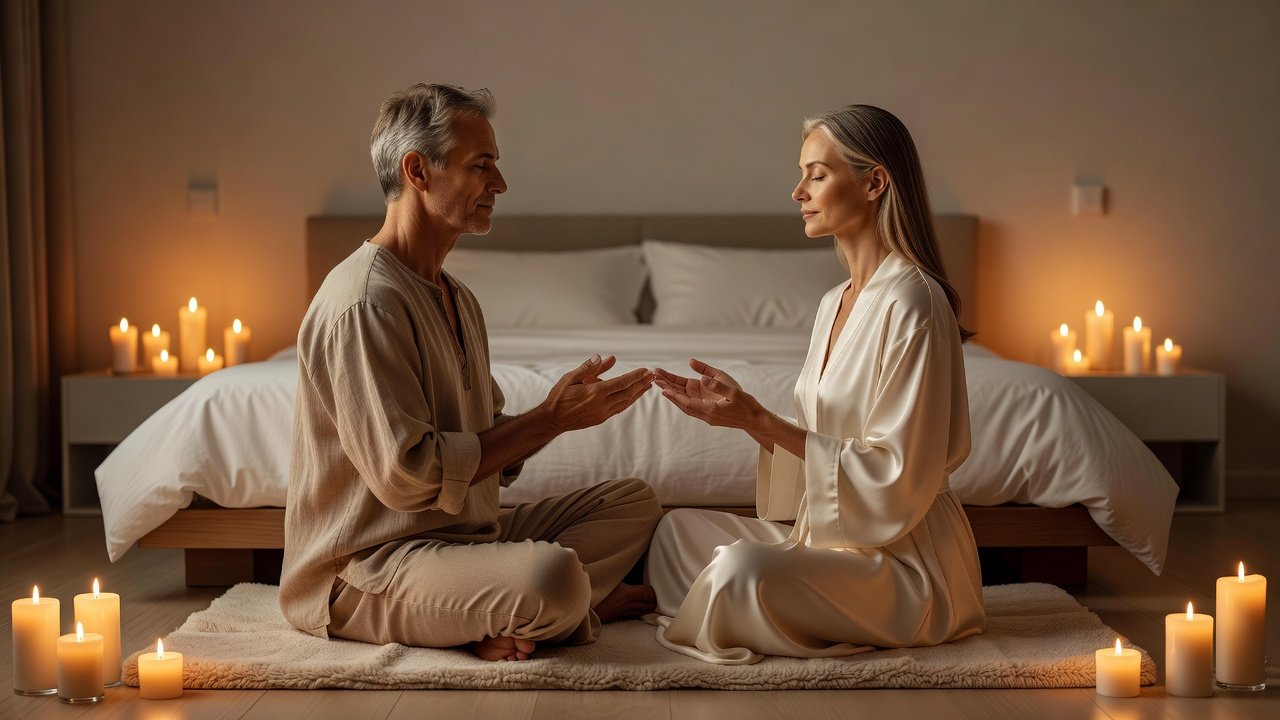
Partners sit cross-legged facing each other in a quiet space. Begin by matching inhales and exhales for five minutes, gradually extending to 15 minutes. Focus on synchronized rhythms to align energy centers. This foundational exercise reduces anxiety and heightens bodily awareness. Practice daily for two weeks before advancing.
2. Eye Gazing Practice
Maintain soft, unbroken eye contact for 7 to 12 minutes without speaking or laughing. Breathe naturally and notice emerging emotions. This ritual fosters vulnerability and reignites attraction by bypassing verbal defenses. Many couples report increased empathy after consistent sessions.
3. Sensual Touch Exploration
Designate 25 minutes for non-genital touch mapping. One partner receives while the other explores with varying pressure and speed. Switch roles and discuss sensations afterward. Emphasize curiosity over performance to rebuild pleasure pathways.
4. Sacred Space Creation
Transform a room corner with dim lighting, comfortable cushions, and calming scents. Hold weekly 45-minute sessions incorporating shared breathing, affirmations, and light movement. This ritual signals intentionality, helping couples prioritize intimacy amid busy calendars.
5. Full-Body Energy Circulation
After mastering prior steps, combine breathwork with gentle rocking motions and visualization of energy flowing between partners. Sessions last 30 minutes and conclude with quiet integration. This advanced practice deepens orgasmic potential without goal orientation.

Real-World Couple Examples Applying These Techniques
Consider Sarah and Michael, a couple in their late 40s balancing remote work and teen children. They began with breathing synchronization during evening wind-downs and progressed to eye gazing after two weeks. Within a month, they noticed reduced arguments and spontaneous affection. Another example involves Priya and Jamal, who integrated sensual touch into weekend mornings. By documenting sensations in a shared journal, they overcame body image concerns and reported heightened satisfaction. A third pair in their 30s used sacred space rituals to counter pandemic-era disconnection, scheduling sessions around hybrid meeting demands. These cases illustrate how progressive application yields sustainable shifts rather than fleeting sparks.
Solo vs. Partnered Approaches: A Detailed Comparison
Solo tantra involves self-practice through breathwork and body scans, building individual awareness that later enhances partnered sessions. Benefits include personal confidence and reduced performance anxiety. Partnered approaches emphasize co-regulation and shared energy, accelerating relational healing but requiring stronger communication. A scannable comparison includes:
- Solo: Flexible timing, focuses on self-pleasure mapping, ideal for introverted individuals.
- Partnered: Builds mutual trust faster, incorporates consent checks in real time, suits extroverted couples.
- Hybrid recommendation: Alternate three solo sessions with two partnered ones weekly for balanced progress.
Both methods complement erotic wellness when integrated thoughtfully.
Practical Tips for Consistent Integration in 2026 Lifestyles
Consistency matters more than intensity. Schedule 15-minute micro-practices during lunch breaks or post-commute. Use phone-free zones to minimize digital interruptions. Track emotional states in a simple notebook to identify patterns. Combine rituals with existing wellness habits like morning yoga or evening walks. For couples with children, involve grandparents for short evening slots. Avoid forcing outcomes; instead, celebrate small shifts in connection quality. These strategies align with modern demands while honoring tantric principles of presence.
Addressing Consent, Pacing, and Measuring Progress
Consent forms the foundation—verbal check-ins before and during each ritual prevent misunderstandings. Pacing should feel comfortable; rushing leads to resistance. Measure progress through qualitative markers such as increased eye contact during conversations, reduced irritability, and spontaneous touch outside rituals. Journaling three times weekly helps quantify subtle improvements over 30 to 60 days.
Frequently Asked Questions
How long before results appear? Most couples notice shifts within three to four weeks of daily practice. Is tantra suitable for all orientations? Yes, rituals adapt to any gender or orientation. What if one partner resists? Start with low-pressure solo elements and invite gradually. How does it differ from therapy? Tantra focuses on embodied experience while professional counseling addresses deeper conflicts.
Actionable Starter Routines Tailored for 2026
Week 1-2: 10-minute breathing sessions twice daily. Week 3: Add eye gazing three times weekly. Week 4: Introduce touch exploration on weekends. Maintain flexibility around work travel by using video check-ins for shared breathing when apart. For broader sexual health context, consult World Health Organization guidelines and Mayo Clinic relationship resources. Additional insights on emotional dynamics appear via American Psychological Association publications.
Conclusion
Tantra practices offer a reliable pathway to rekindle desire through consistent, mindful engagement. By progressing through the rituals, applying real-world adaptations, and honoring consent, long-term couples can cultivate enduring intimacy suited to 2026 realities. Begin today with a single breathing exercise to experience the transformative potential firsthand.
No comments yet. Be the first!