 Spicy Trip

Introduction to BDSM Safety Journals
Maintaining a dedicated BDSM safety journal is a powerful tool for anyone engaged in kink play, whether you're a beginner or an experienced practitioner. This practice involves systematically recording details from each scene to identify patterns, reduce risks, and enhance overall safety and satisfaction. By treating your experiences as data points, you can make informed decisions that prioritize consent, communication, and well-being. Many people discover that without written records, subtle issues like recurring fatigue after specific activities or emotional dips during certain aftercare methods go unnoticed for months. The concept draws from evidence-based approaches in sexual health, emphasizing self-reflection and continuous improvement. According to resources from the National Coalition for Sexual Freedom, proactive documentation helps mitigate common risks in alternative sexual practices. Over time, a well-kept journal becomes a personal reference library that supports safer exploration and deeper self-awareness.
Why Track Scenes in a Safety Journal?
Logging scenes allows you to spot trends in physical responses, emotional states, and aftercare effectiveness over time. For instance, you might notice that certain tools consistently lead to longer recovery periods or that specific aftercare routines improve mood stability. This data-driven method supports personalized safety insights, helping both individuals and couples refine their practices. Beginners often find it builds confidence by providing concrete evidence of what works, while veterans use it to evolve their play styles safely without repeating past mistakes. Consider a scenario where a participant experiences unexpected bruising after rope bondage; a journal entry noting rope type, tension, duration, and skin condition afterward can reveal whether the issue stems from technique, hydration levels, or equipment wear. Tracking also fosters accountability, turning subjective feelings into measurable observations that guide future negotiations.
Choosing Journal Formats: Paper vs Digital Options
Selecting the right format depends on your lifestyle and privacy needs. Paper journals offer tactile simplicity and no digital footprint, making them ideal for those concerned about data breaches or device failures. A simple notebook with dated sections can be carried discreetly and reviewed during quiet moments. Digital options, such as encrypted apps or password-protected documents, provide searchability, backups, and easy pattern analysis through spreadsheets or tagging systems. Comparisons show paper formats excel in offline accessibility but lack advanced analytics, while digital tools allow filtering entries by activity type or partner for rapid insights. Consider hybrid approaches, like scanning paper notes into secure cloud storage for redundancy. Popular digital choices include note-taking apps with end-to-end encryption, though users should verify features like automatic backups and access controls before committing.
Essential Elements to Record in Your Journal
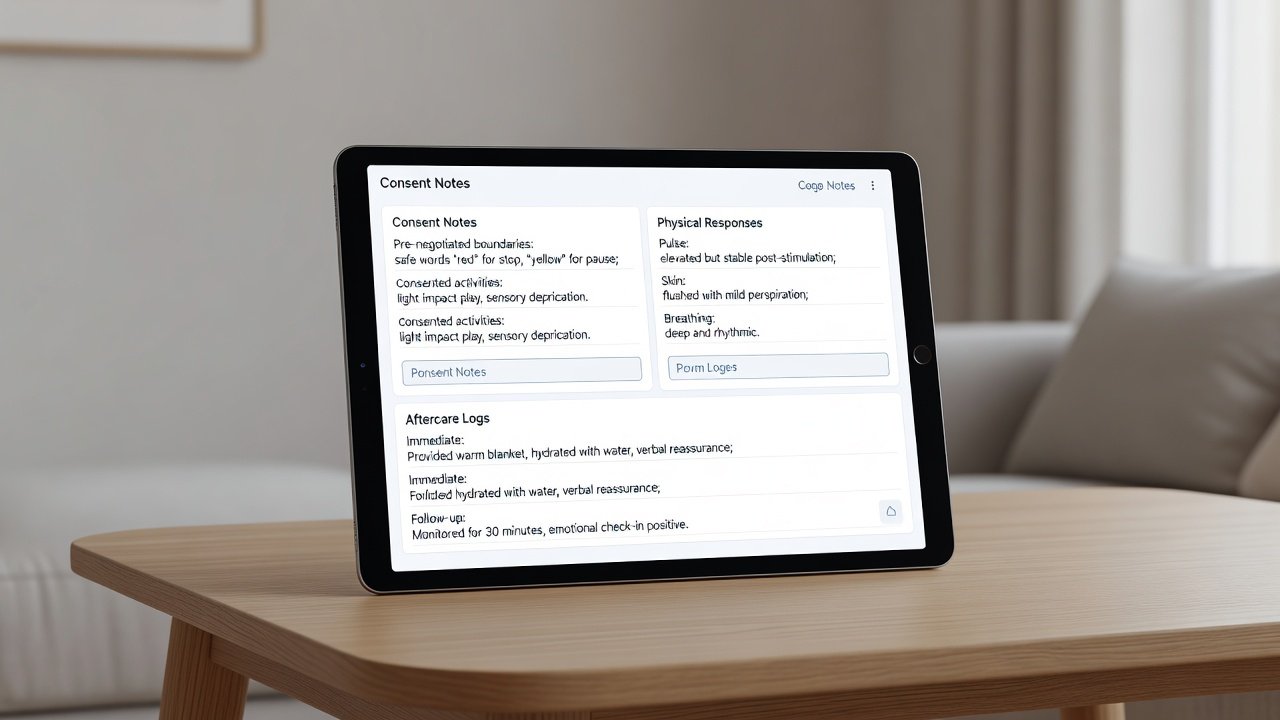
Every entry should capture core details for comprehensive tracking. Key elements include date, time, location, and duration of the scene; participants involved and their roles; tools, toys, or techniques used, including intensity levels; consent discussions and any negotiated boundaries or safewords; physical responses such as pain levels, marks, or physiological changes; emotional states before, during, and after the scene; aftercare provided and its outcomes; and any incidents, near-misses, or adjustments needed. Elaborating on each creates richer data. For example, under tools, note not just the item but also brand, condition, and sterilization method. Consent notes should detail verbal affirmations, written agreements if used, and any mid-scene check-ins. Physical responses benefit from rating scales, such as a 1-10 pain metric at intervals. Emotional tracking might use words like "euphoric," "anxious," or "grounded" alongside triggers. These elements create a rich dataset for later analysis and help prevent overlooking critical safety factors.
Step-by-Step Setup Instructions
Follow these steps to establish your journal effectively. First, choose your format and acquire necessary supplies or apps, testing one or two options for a week to ensure comfort. Second, define your logging categories based on personal priorities, such as adding sections for hydration tracking or partner feedback if relevant. Third, create a template for consistency across entries, printing or saving copies for quick use. Fourth, schedule regular review sessions, such as weekly or monthly, where you scan for patterns without rushing. Fifth, establish privacy protocols from the start, including where the journal lives and who may access summaries. Start simple and expand as you gain experience, revisiting your system every few months to refine categories based on what proves most useful.
Sample Entry Templates
Here is a basic template you can adapt, along with variations for different experience levels. The beginner version focuses on fundamentals: Scene Date, Participants, Consent Notes, Activities, Physical Response, Emotional State, Aftercare, and Reflections. An intermediate template adds columns for intensity ratings and follow-up check-ins 24 hours later. Advanced users might include quantitative metrics like heart rate notes or detailed partner debriefs. Customize by inserting your own prompts, such as "What felt unexpectedly good?" or "Any equipment maintenance needed?" Using this as a foundation ensures repeatable, thorough documentation that grows with your practice.
Spotting Patterns and Reviewing Entries with Partners
Over multiple entries, analyze for recurring themes like preferred intensities or triggers. Share anonymized summaries with partners during check-ins to align on improvements. This collaborative review strengthens relationships and mutual safety. For example, if three entries show delayed soreness after a particular position, the pair can adjust timing or add supportive props. Set aside dedicated time for reviews, perhaps over coffee, and focus on facts rather than blame. Patterns might emerge in seasonal changes, such as lower energy levels during stressful work periods, prompting gentler scenes.
Privacy Best Practices
Protect sensitive information by using codes instead of real names, storing journals securely, and never sharing without explicit permission. Digital users should enable encryption and two-factor authentication. Resources from Planned Parenthood highlight the importance of confidentiality in sexual wellness tracking. Additional steps include avoiding cloud services without strong security audits and keeping physical journals in locked drawers. If traveling, consider temporary digital-only entries with immediate deletion after transfer to a secure home system. Always discuss privacy expectations with partners upfront.
Common Mistakes to Avoid
New journal keepers often skip post-scene logging when tired, leading to incomplete records. Another pitfall is vague descriptions that hinder pattern recognition later. Over-documenting every minor detail can cause burnout, so balance thoroughness with sustainability. Finally, neglecting partner consent for recorded details risks trust issues; always confirm before noting shared experiences.
Integrating Journals with Aftercare Routines
Link journal entries directly to aftercare by noting immediate reactions and scheduling follow-up logs. This creates a feedback loop where aftercare adjustments are tested and recorded, leading to more effective support over repeated scenes. For instance, testing different hydration or rest protocols becomes measurable when tracked consistently.
FAQ: Common Concerns About BDSM Safety Journals
How often should I update my journal?
Log immediately after each scene while details are fresh, then review periodically for deeper insights.
What if I forget details?
Use quick voice notes or bullet points right away, then expand later when rested.
Is this suitable for group play?
Yes, but obtain consent for all recorded information and anonymize where possible to respect everyone's privacy.
Can journals replace professional advice?
No, they complement but do not substitute consultations with kink-aware professionals or medical experts. For broader sexual health guidance, consult World Health Organization materials on safe practices.
How do I handle negative entries?
Frame them as learning opportunities, focusing on specific adjustments rather than self-criticism.
Conclusion
A BDSM safety journal transforms anecdotal experiences into actionable intelligence, fostering safer and more fulfilling kink practices. By implementing these strategies with consistent effort, you invest in long-term well-being and deeper connections with yourself and your partners.

No comments yet. Be the first!