 Spicy Trip

Understanding BDSM Safety in 2026
Entering the world of BDSM requires more than curiosity; it demands a commitment to safety that protects physical and emotional well-being. Beginners often overlook critical protocols, leading to avoidable harm. This guide examines frequent errors and provides actionable strategies to build safer experiences. In 2026, with growing awareness around consent and risk-aware practices, newcomers must prioritize education to avoid common traps that can turn exciting explorations into regrettable incidents. Safety in kink is not static but evolves with community insights, personal growth, and updated health guidelines that emphasize proactive risk management.
Mistake 1: Inadequate Communication Before Play
Many newcomers assume shared excitement equals mutual understanding. In reality, skipping detailed negotiations creates risks. Real-world examples include partners discovering allergies to materials only after a scene begins or mismatched expectations about intensity levels causing distress. One couple reported a near-miss when a participant failed to disclose a history of anxiety, leading to an unexpected emotional response mid-scene that required immediate intervention. Another case involved assumptions about pain thresholds that resulted in unintended bruising and trust erosion.
Prevention starts with explicit conversations covering limits, safewords, and medical histories. Use a structured checklist: discuss hard limits, soft limits, and desired activities. Compare assumptions with protocols from experienced practitioners who emphasize ongoing check-ins. Schedule at least two negotiation sessions before any play, documenting agreements in writing for clarity. This approach reduces misunderstandings and fosters trust, turning potential pitfalls into foundations for enjoyable dynamics. Additionally, incorporate role-playing discussions to simulate scenarios and reveal hidden concerns before they arise in actual play.
Mistake 2: Improper Tool Handling and Hygiene
Beginners frequently mishandle equipment like restraints or impact toys, leading to injuries such as nerve compression or skin tears. Skipping sterilization between uses introduces infection risks. For instance, using unwashed rope on sensitive areas has caused bacterial issues in documented cases shared within kink communities. Poor grip techniques during impact play can also lead to accidental strikes on unintended body parts, amplifying injury potential.
Step-by-step prevention includes inspecting tools for wear, learning proper techniques through workshops, and maintaining strict cleaning routines. Always prioritize body-safe materials and store items correctly. Research manufacturer guidelines for each toy and practice on inanimate objects first. This methodical process ensures both safety and longevity of equipment while minimizing health concerns. Consider investing time in certified classes that cover anatomy-aware handling to further reduce risks associated with improper use.
Mistake 3: Skipping Aftercare Routines
Aftercare is often dismissed as optional, yet it addresses subdrop and emotional vulnerability. Without it, participants may experience prolonged anxiety or disconnection. Examples include individuals feeling isolated for days after intense scenes due to neglected physical and emotional support. In some cases, partners have reported mood swings lasting over a week when hydration and debriefing were overlooked.
Expert protocols recommend immediate physical comfort, hydration, and debriefing. Create personalized aftercare plans in advance to ensure consistency. Include elements like blankets, favorite snacks, and quiet conversation time. Regular aftercare not only aids recovery but also strengthens the bond between partners, making future play more secure and fulfilling. Track aftercare effectiveness in a journal to refine approaches over multiple sessions.
Additional Pitfalls: Ignoring Health and Overlooking Consent Nuances
Beyond the core three mistakes, beginners sometimes neglect pre-existing health conditions or misinterpret consent as a one-time agreement. For example, failing to account for medications that affect circulation can lead to circulation issues during bondage. Consent must be enthusiastic, ongoing, and revocable at any moment. Overlooking these can escalate minor issues into emergencies, such as fainting from dehydration combined with physical restraint.
To prevent these, maintain updated health disclosures and revisit consent throughout the scene. Educate yourself on nuances like implied versus explicit consent using resources from established organizations. Incorporate periodic health check-ins and consider consulting kink-aware medical professionals for tailored advice.
Practical Steps for First-Time Scenes
Start small with low-intensity activities to build confidence. Prepare a dedicated play space with easy access to exits and supplies. Test all equipment in advance and have backup plans for unexpected reactions. Debrief immediately after to identify what worked and what needs adjustment, creating a feedback loop for continuous improvement.
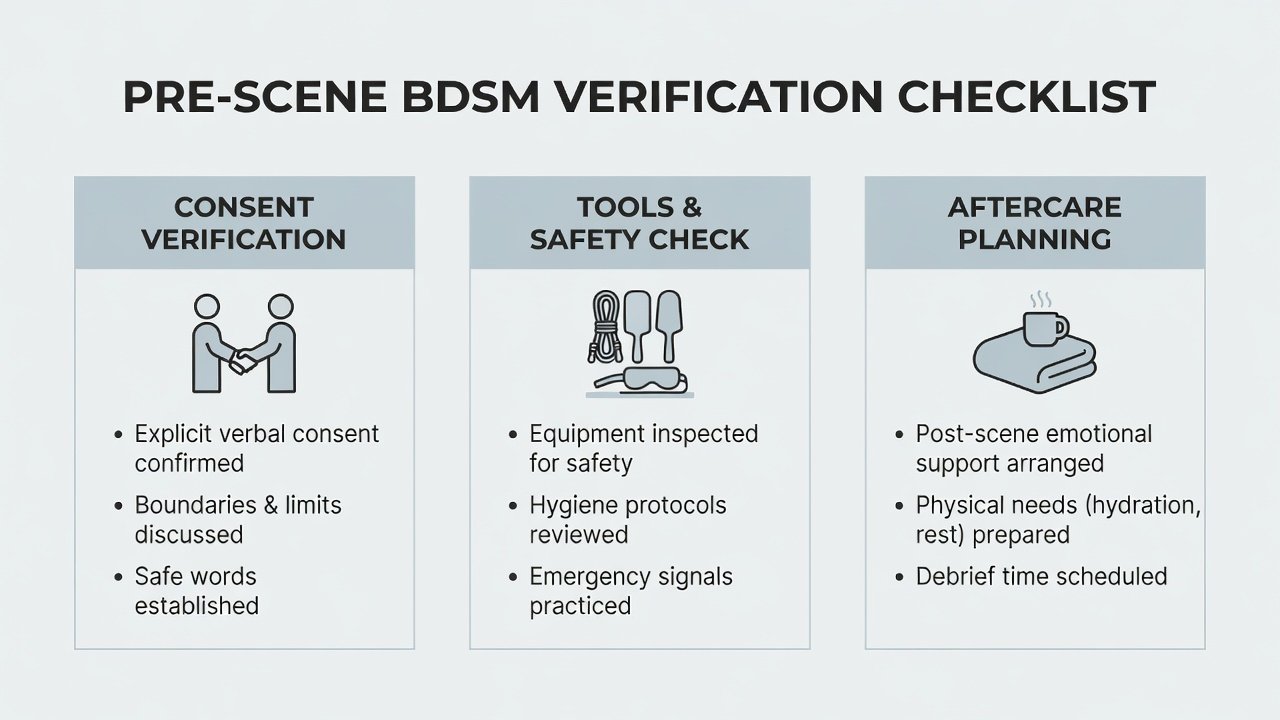
Pre-Scene Verification Checklist
- Confirm consent and safewords with verbal and written agreement
- Review medical conditions, allergies, and current medications
- Inspect all equipment for damage or wear
- Prepare aftercare supplies including water, snacks, and comfort items
- Establish emergency contacts and have a first-aid kit nearby
- Discuss triggers and emotional boundaries in detail
- Test safewords in a low-stakes environment beforehand
- Review scene duration and intensity expectations
Comparing Beginner Assumptions vs. Expert Protocols
Common assumptions include believing experience equals safety or that one conversation suffices. Experts advocate layered approaches: multiple discussions, education from reliable sources, and gradual progression. Resources like the National Coalition for Sexual Freedom offer guidelines on risk reduction. Similarly, the Planned Parenthood site provides broader sexual health insights applicable to kink dynamics, emphasizing informed decision-making. Cross-reference these with community forums moderated by certified educators for practical applications.
Recognizing Early Warning Signs and Adjusting Play
Watch for physical cues like numbness, dizziness, or emotional shifts such as sudden withdrawal. Adjust play immediately by pausing, checking in, and providing support. If issues persist, consult medical professionals. This proactive stance helps maintain safety over time. Develop a shared vocabulary for subtle signals to catch problems before they escalate.
FAQs on BDSM Safety
How do I start safe negotiations?
Begin with open-ended questions about desires and boundaries in a neutral setting, allowing time for thoughtful responses without pressure.
What if a safeword is ignored?
Stop all activity immediately, provide care, and reassess the dynamic before future play, potentially seeking mediation from community resources.
Can safety evolve over time?
Yes, regular reviews of protocols help adapt to changing needs and reduce risks long-term, incorporating new learnings from each experience.
What role does education play in avoiding mistakes?
Ongoing learning through books, workshops, and trusted online materials builds the knowledge base needed to identify and sidestep common errors effectively.
How can partners handle mismatched experience levels?
Pair less experienced individuals with patient mentors and use slower pacing to ensure everyone feels secure and informed throughout the process.
Conclusion
Mastering BDSM safety transforms potential pitfalls into foundations for trust and enjoyment. By addressing these mistakes proactively with detailed planning, checklists, and continuous education, beginners create sustainable, positive experiences in 2026 and beyond. Prioritizing these elements leads to more confident and rewarding explorations for everyone involved.

No comments yet. Be the first!