 Spicy Trip

Understanding Dynamic Consent in Modern BDSM Practice
Dynamic consent represents an advanced evolution in BDSM safety, moving beyond one-time negotiations to accommodate the fluid nature of desires, emotions, and boundaries in long-term relationships. As practitioners seek deeper kink basics for 2026, this approach prioritizes ongoing communication to foster trust and reduce risks during scenes. Unlike static models that lock in agreements at the start, dynamic consent recognizes that people change, relationships evolve, and external factors can influence readiness for certain activities at any moment. This makes it particularly valuable for couples or groups engaged in repeated play over months or years, where initial excitement may give way to deeper emotional layers or unexpected triggers.
At its core, dynamic consent encourages participants to view consent not as a contract signed once but as a continuous dialogue. It integrates seamlessly with established safety tools while adding layers of adaptability that static frameworks often lack. Practitioners who adopt this model report stronger connections and fewer incidents of regret or harm because adjustments happen in real time rather than after problems arise.
Core Principles of Evolving Consent
Evolving consent rests on several key principles including transparency, flexibility, and mutual accountability. Transparency means openly sharing internal states even when they feel vulnerable. Flexibility allows boundaries to shift without judgment, provided all parties agree to the change. Mutual accountability ensures that everyone involved takes responsibility for monitoring both their own and their partner's well-being throughout the experience.
These principles help address the reality that arousal, stress, or even simple fatigue can alter how someone perceives an activity mid-scene. By embedding regular reassessment into the process, dynamic consent reduces the chance that subtle discomfort escalates into lasting emotional distress.
Comparing Dynamic Consent to SSC and RACK
Traditional frameworks like Safe, Sane, and Consensual (SSC) and Risk-Aware Consensual Kink (RACK) provide foundational guidelines but often assume fixed boundaries established upfront. SSC emphasizes that all activities should remain safe, sane, and fully consensual at the moment of negotiation, while RACK acknowledges that some risk is inherent and focuses on informed awareness of those risks. Dynamic consent builds directly on these by incorporating continuous reassessment, allowing participants to revisit agreements as circumstances evolve.
For instance, SSC emphasizes rationality at the outset, while RACK acknowledges inherent risks. Dynamic models integrate these by adding layers of periodic validation, making them more suitable for relationships spanning multiple years. Many experienced practitioners now combine elements of all three, using SSC and RACK as the base layer and dynamic consent as the ongoing maintenance system. This hybrid approach has gained traction because it balances structure with adaptability, helping partners navigate both physical and psychological changes without discarding proven safety concepts.
Integrating Dynamic Consent with Safewords and Aftercare
Safewords remain central, but in dynamic systems they pair with scheduled check-ins to detect subtle emotional shifts before they escalate. Aftercare protocols also adapt, evolving from immediate post-scene routines to include follow-up discussions days later. This integration ensures that physical tools like restraints or impact implements are used safely while addressing psychological elements that may surface unexpectedly. For example, a safeword might stop a scene instantly, yet the dynamic model requires a follow-up conversation within 48 hours to explore why the word was used and whether the underlying limit has shifted permanently.
Aftercare in a dynamic framework might include not only cuddling and hydration but also structured questions about emotional state, energy levels, and any new insights gained during play. This extended approach helps prevent the common issue of delayed emotional drops that can occur hours or days after intense scenes.
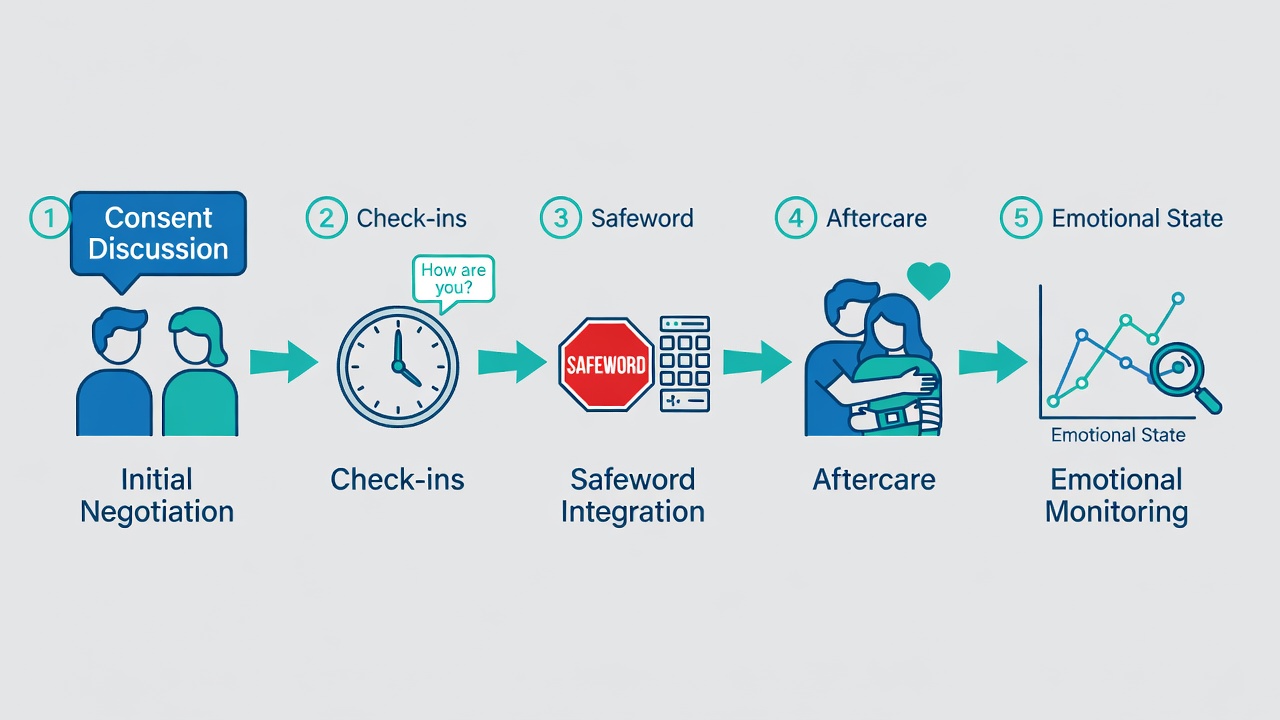
Numbered How-To Guide: Creating Personalized Consent Frameworks
- Establish baseline agreements through detailed initial discussions covering hard limits, soft limits, and desired activities. Take time to explore each partner's history, triggers, and long-term goals so the foundation is thorough rather than rushed.
- Schedule regular review sessions, such as monthly or after significant life events, to update the framework. These sessions should occur in a neutral, non-sexual setting where both partners feel calm and focused on honest reflection.
- Incorporate real-time signals beyond safewords, including nonverbal cues and pre-agreed phrases for quick adjustments. Examples include hand signals, eye contact patterns, or code words that indicate a need for slower pacing without ending the scene entirely.
- Document changes in a shared journal or app to track evolving preferences accurately. Recording dates, context, and outcomes helps identify patterns over time and prevents important details from being forgotten.
- Include emotional check-ins focused on mental state, stress levels, and relationship dynamics before and after scenes. These can be brief two-minute conversations or longer structured talks depending on the intensity of the planned activity.
- Test the framework in low-stakes scenarios to refine its effectiveness before applying it to intense play. Starting with lighter bondage or sensation play allows partners to practice check-ins without high emotional stakes.
Real-World Examples of Consent Check-Ins
Consider a couple who negotiates a bondage scene but pauses midway for a brief verbal check-in about comfort levels. They might ask simple questions such as “How is your breathing?” or “Any numbness or emotional shifts?” Another example involves partners using a traffic-light system during multi-hour sessions to signal green for continuation, yellow for modification, or red for immediate stop. In one documented case, a long-term couple discovered through check-ins that one partner’s tolerance for impact play decreased during periods of high work stress, leading them to adjust intensity levels proactively rather than risk an unwanted reaction.
These practices help mitigate risks when emotional states fluctuate due to external factors like work stress, health changes, or even seasonal mood variations. Regular check-ins turn potential problems into opportunities for deeper understanding and connection.
Risk Mitigation for Emotional Shifts
Emotional changes can arise from past trauma resurfacing or hormonal variations. Dynamic consent mitigates this through proactive debriefs and flexible scene adjustments. Practitioners should monitor for signs like hesitation or altered breathing patterns. Creating a shared vocabulary for describing emotional states in advance makes it easier to recognize and respond to shifts quickly. For additional support, many communities recommend resources from organizations such as the National Coalition for Sexual Freedom that provide education on recognizing these shifts and maintaining healthy dynamics over time.
Practical Tips for Ongoing Relationships
Long-term play benefits from small rituals that reinforce the dynamic consent process. Some couples keep a dedicated “consent notebook” visible in their play space as a reminder to review agreements regularly. Others set calendar reminders for quarterly discussions that include both BDSM-specific topics and broader relationship health. When introducing new tools or activities, always run a trial version with built-in check-ins before committing to full scenes. This gradual approach builds confidence and reduces the likelihood of miscommunication.
Frequently Asked Questions
How often should consent frameworks be reviewed?
Reviews are recommended quarterly or whenever major life changes occur, ensuring the model stays relevant. Some couples add extra reviews after events like job changes, moves, or health diagnoses.
What if a partner struggles to articulate changes?
Use written prompts or third-party facilitated discussions to ease communication barriers. Journaling between reviews or using structured worksheets can help quieter partners express evolving needs more clearly.
Can dynamic consent apply to casual play?
Yes, but it requires even clearer upfront signals due to less established trust. Casual partners should still schedule at least one brief follow-up conversation within 24 hours of play.
How does dynamic consent handle power exchange dynamics?
It strengthens them by making the exchange more intentional and responsive, allowing the dominant partner to adjust their approach based on real-time feedback rather than assumptions.
Conclusion
Dynamic consent models elevate BDSM safety by embracing change, providing practitioners with tools for sustainable, fulfilling exploration. Implementing these practices leads to deeper connections and reduced harm in evolving relationships. By combining the structure of traditional frameworks with continuous dialogue, participants create safer, more satisfying experiences that grow alongside their relationships.


No comments yet. Be the first!