 Spicy Trip

Introduction to Electrical Play Safety and Sensation Mapping
Electrical play in kink involves controlled use of devices that deliver sensations through low-level currents, creating unique tingling, pulsing, or warming effects on the skin. For beginners in 2026, focusing on sensation mapping rather than rushing into device choices builds a safer foundation. This approach emphasizes charting personal responses to understand limits, preferences, and boundaries before escalating intensity. Sensation mapping transforms subjective feelings into actionable data that can be referenced during future scenes, helping participants avoid common oversights that lead to discomfort or injury.
Many newcomers overlook how factors like skin temperature, recent exercise, or even stress levels alter how electrical sensations register. Mapping provides a structured way to explore safely at home or in low-pressure settings. It highlights individual variations, such as how moisture levels or recent skin care affect conductivity. By integrating this with ongoing consent practices, participants create scenes that prioritize communication and physical feedback. The result is deeper trust and more enjoyable experiences over time.
Why Sensation Mapping Matters for Beginners
Many new practitioners start with popular devices without first testing how their body processes electrical input. This can lead to surprises during scenes, including unexpected intensity spikes or areas that react more strongly than anticipated. Mapping provides a structured way to explore safely at home or in low-pressure settings. It highlights individual variations, such as how moisture levels or recent skin care affect conductivity. Authoritative health resources like the CDC stress the importance of understanding bodily responses to any form of stimulation to prevent injury. Applying similar principles here supports informed kink exploration. Beginners who map sensations report higher confidence and fewer interruptions once play begins.
Step-by-Step Methods to Chart Body Responses
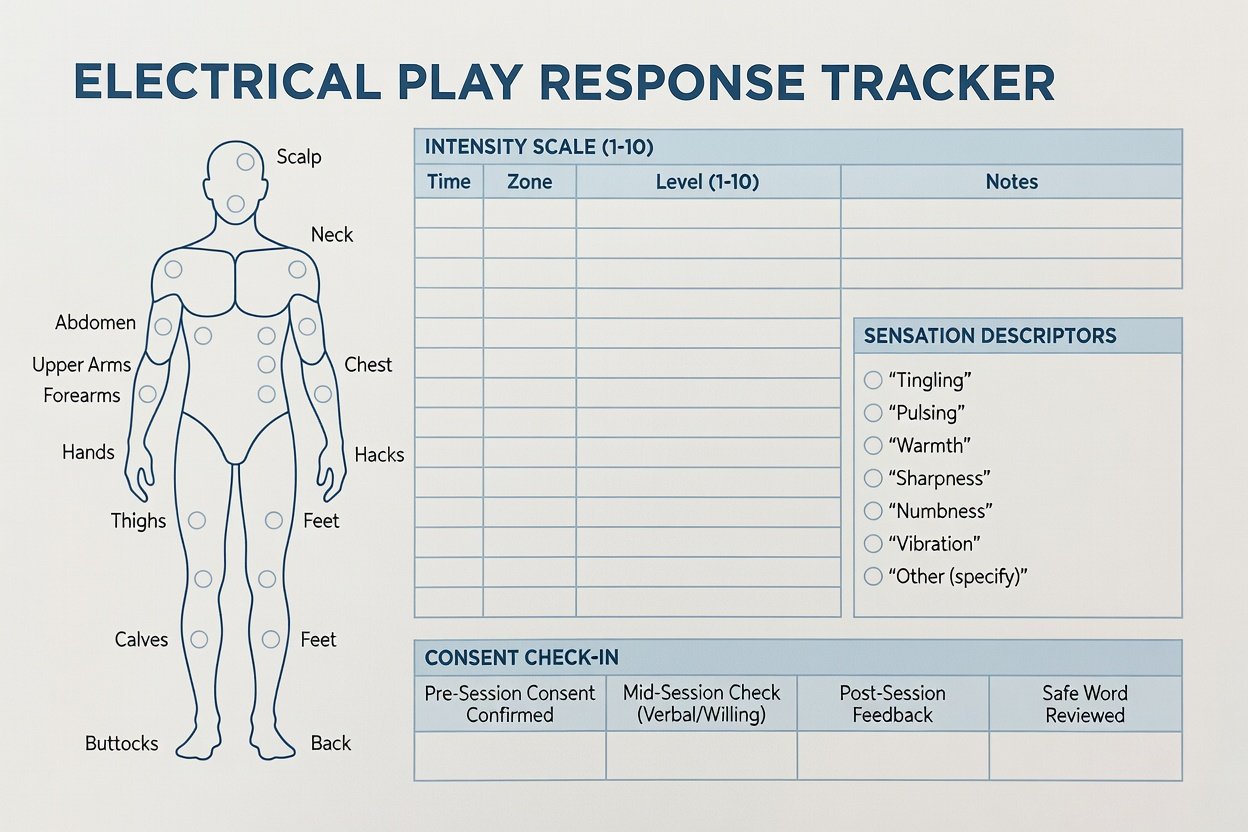
Begin with a clean, dry environment and basic tools such as a low-output violet wand or TENS unit set to minimal settings. Use a body outline diagram on paper or a digital note app. Follow these detailed steps for thorough results.
- Prepare the skin by cleansing and ensuring no lotions that could alter conductivity; pat dry thoroughly.
- Start at the lowest intensity on neutral areas like the forearm or outer thigh to establish a baseline.
- Apply brief contacts of 5-10 seconds and record descriptors such as sharp, warm, buzzing, dull, or prickling.
- Move systematically across zones including arms, shoulders, torso, lower back, thighs, and calves while avoiding genitals, neck, and head initially.
- Note duration tolerance, any lingering sensations post-contact, and emotional reactions like relaxation or tension.
- Repeat sessions over multiple days to account for variables like fatigue, hydration, or time of day.
This builds a reliable personal map that evolves with experience. Track patterns such as how left versus right sides differ or how sensitivity changes after 15 minutes of continuous mapping.
Intensity Scaling Examples
Use a simple 1-10 scale where 1 is barely noticeable and 10 is near personal limit. For example, a setting of 2 on the upper back might feel like light static while the same output on the inner thigh registers as a 5 due to thinner skin and higher nerve density. Document how intensity feels different after 20 minutes of play versus at the start of a session. Another example involves comparing broad flat electrodes on larger muscle groups, which often allow gradual adaptation, against pinpoint attachments that can produce sharper localized effects even at low levels.
Low-risk starting points include testing on clothed areas first or using indirect contact methods. Common pitfalls involve skipping the mapping phase entirely and applying higher intensities directly to sensitive zones like the abdomen without prior charting. These comparisons help beginners choose safer entry points while recognizing when to slow down or adjust based on recorded data.
Integrating Consent Check-Ins During Scenes
Consent is dynamic and must be revisited throughout any electrical play session. During mapped scenes, pause every 5-7 minutes for verbal check-ins using traffic light systems: green for continue, yellow for adjust intensity or location, and red for immediate stop. Tie check-ins directly to mapped data by asking specific questions such as “How does the current feel compared to our charted level 4 on the scale?” or “Is this sensation matching the buzzing we noted on the forearm map?”
Partners can incorporate non-verbal signals like hand squeezes if speech is limited. This method keeps both participants engaged and responsive to real-time feedback, turning the map into a living document that guides the scene.
Practical Worksheets for Tracking
Create a simple table with columns for body zone, intensity level, sensation description, duration applied, post-session notes, and emotional state. Include rows for pre-session hydration level and skin condition. Printable versions or spreadsheet templates help beginners maintain consistency across sessions. Customize the worksheet by adding columns for partner observations or recovery time needed. Review completed sheets together after each mapping session to refine future plans and identify emerging patterns in responses.
Red-Flag Identification and When to Pause Play
Watch for persistent numbness lasting more than a few minutes, sharp pain beyond mapped expectations, muscle twitching that does not subside quickly, skin redness or discoloration, or sudden dizziness. These signal an immediate pause and potential end to the session. Health considerations include consulting a physician beforehand if you have pacemakers, epilepsy, circulatory conditions, or recent surgeries. Resources such as the Mayo Clinic provide guidance on electrical sensitivity risks. Scenario examples include noticing unexpected warmth in a previously mapped low-sensitivity area, which may indicate changing skin conditions that require stopping to reassess.
Always have a safe word and visible exit plan ready, including quick access to a first-aid kit and water.
Aftercare Tied to Physical Feedback
Post-scene care should reference the sensation map directly. Apply soothing lotions or aloe to areas that showed prolonged warmth or tingling. Discuss which sensations lingered positively versus those needing more recovery time, such as mild redness on mapped high-sensitivity zones. Incorporate hydration, light stretching, and quiet reflection to aid return to baseline. Partners can revisit the worksheet during aftercare to note any new observations that update the map for next time.
FAQs on Health Considerations
Q: Can electrical play affect nerve health? A: When done within mapped limits and low intensities, risks remain minimal for healthy adults. Exceeding personal thresholds increases potential for temporary irritation or prolonged sensitivity.
Q: When should beginners pause or stop entirely? A: Pause at any yellow-flag sensation or if consent check-ins reveal discomfort. Stop if medical symptoms appear and seek professional advice promptly.
Q: How does hydration influence sessions? A: Well-hydrated skin conducts differently and may heighten sensations; always map under similar conditions to your planned scene for accurate comparisons.
Q: Are there long-term considerations for repeated play? A: Regular mapping helps track any gradual changes in tolerance or sensitivity over weeks and months, allowing adjustments before issues arise.
Q: What if a mapped area feels different on a new day? A: Environmental factors like temperature or stress can shift responses; treat it as a fresh data point and adjust intensity downward until recharted.
Conclusion
Sensation mapping empowers kink beginners to explore electrical play with greater confidence and safety. By focusing on personal data collection, consent integration, detailed worksheets, and structured aftercare, participants reduce common pitfalls while maximizing enjoyment. Start slow, document thoroughly across multiple sessions, and always prioritize open communication. This methodical approach turns electrical play into a sustainable and rewarding practice for years to come.

No comments yet. Be the first!