 Spicy Trip

Introduction: Consent That Fits Your Schedule
Modern life often leaves little room for extended conversations, yet enthusiastic consent remains essential for healthy intimacy. Busy couples need streamlined methods that integrate seamlessly into demanding routines. This guide delivers practical 2026 communication hacks focused on micro-check-ins, text-based boundaries, and quick debriefs, helping partners stay connected without sacrificing time. The search intent behind this topic centers on time-strapped individuals who want to uphold clear boundaries and enthusiastic consent amid packed calendars, work deadlines, and family obligations. Rather than treating consent as a separate lengthy discussion, these approaches embed it into daily life for immediate value and reduced friction.
Research from health organizations highlights that consistent, brief communication builds trust more effectively than occasional long discussions. By embedding consent into daily habits, couples can reduce misunderstandings, enhance satisfaction, and foster deeper emotional connections. This article goes beyond surface tips to provide step-by-step methods, real-world examples, comparisons of approaches, and solutions to common obstacles.
Why Quick Consent Matters for Busy Couples
Time constraints can erode relationship quality if consent becomes an afterthought or source of anxiety. Quick hacks prevent this by making boundary checks habitual and low-pressure. They support enthusiastic consent, where both partners actively affirm desire rather than assuming it based on past patterns. In 2026, with hybrid work and high-stress lifestyles prevalent, couples report higher fulfillment when consent feels natural rather than obligatory.
Compared to traditional scheduled talks that require carving out an hour, streamlined approaches reduce awkwardness and forgetfulness. A key advantage is adaptability: these methods work whether you have young children, travel frequently, or manage multiple jobs. The result is stronger intimacy because partners feel heard in real time without the buildup of unaddressed concerns.
Micro-Check-Ins During Daily Routines
Integrate consent into existing moments to avoid carving out extra time. Identify natural pauses in your day such as morning coffee, commuting, lunch breaks, or evening wind-down. Step-by-step method for implementation:
- Map your shared routines for one week to spot 3-4 reliable touchpoints.
- Prepare 10-15 second prompts that invite yes/no or scaled responses.
- Listen without interruption and confirm understanding with a brief recap.
- Rotate prompts to keep conversations fresh and prevent rote repetition.
Real example one: While preparing breakfast, one partner says, "I'm thinking about connecting tonight—green light for you or would you prefer a relaxed evening?" Real example two: During a shared commute, "How's your energy for intimacy this week? Anything on your mind?" This normalizes the conversation and catches shifts in desire early. Variations include non-verbal signals like a specific hand squeeze for "yes, let's talk more later" when verbal check-ins feel disruptive in public.
Text-Based Boundary Setting
Texting allows asynchronous communication perfect for packed calendars and different time zones. 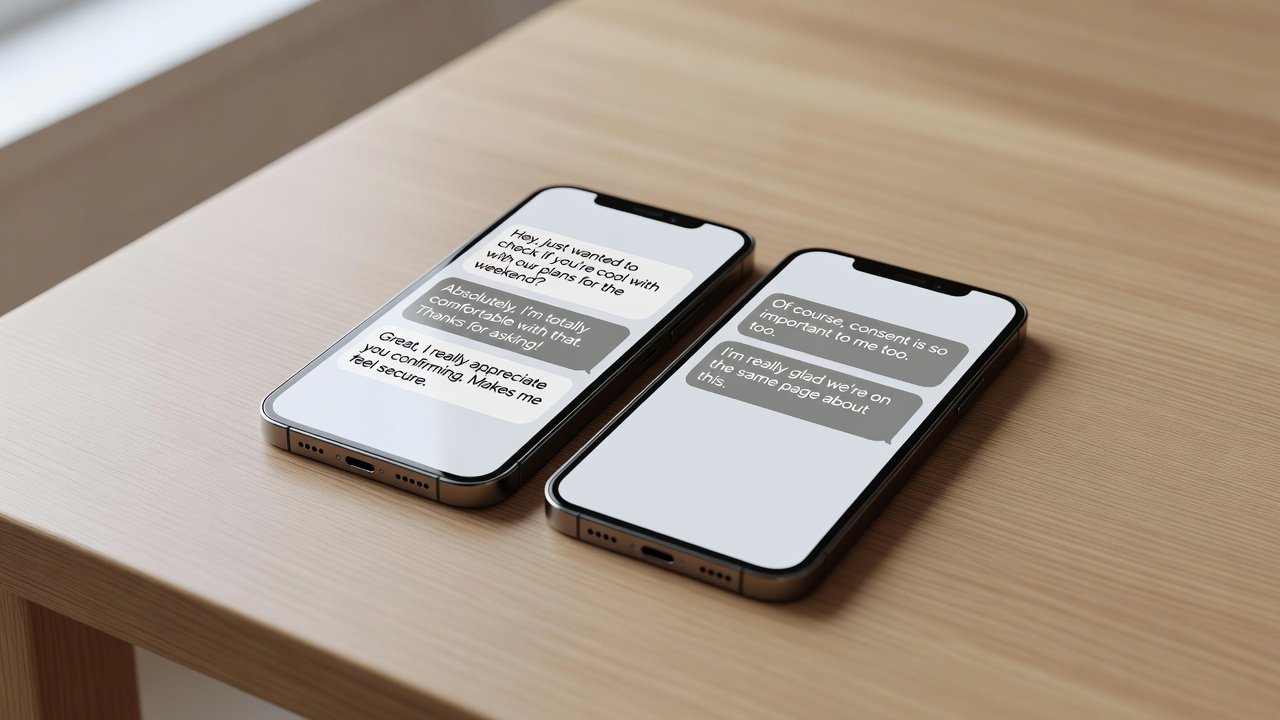
Actionable scripts include: "Tonight I'm open to X but not Y—your thoughts?" or "Reminder: let's check in before we start so we both feel good." Another: "My stress is high today so gentle touch only please." Compare traditional face-to-face marathons, which can feel draining after a long workday, versus texts that allow thoughtful replies without immediate pressure. Benefits include reduced anxiety, documented agreements for later reference, and the ability to revisit boundaries mid-week without scheduling a meeting. Potential pitfalls to avoid include using vague language; always be specific about preferences and invite reciprocal input.
Post-Intimacy Debriefs
Keep debriefs under two minutes right after intimacy while the experience is fresh. Use prompts like "What felt great for you?" and "Anything to adjust next time?" This reinforces positive habits and prevents small issues from growing. Real example: After intimacy, one partner shares, "The slow pace was perfect—next time I'd love more eye contact." The other responds briefly and agrees on a trial for the following encounter. Tips for success include staying positive first, using "I" statements, and ending on an affirming note to maintain emotional closeness.
Traditional vs Streamlined Approaches: A Direct Comparison
Traditional methods involve dedicated hour-long sessions that busy schedules rarely accommodate and often lead to procrastination. Streamlined hacks use 30-60 seconds multiple times daily across multiple channels. The latter wins for consistency, as frequent micro-interactions outperform infrequent deep dives. Couples who switch report fewer forgotten boundaries and quicker conflict resolution. Mistakes to avoid when transitioning include over-relying on one method; combine texts with in-person cues for best results.
Building a Consent Toolkit for Long-Term Success
Create a shared digital note or private chat folder with favorite scripts, code words, and past agreements. Review it monthly during a low-pressure moment. Practical steps: list three go-to check-in phrases, agree on a "pause" signal, and schedule a quarterly 15-minute relationship tune-up. This toolkit evolves with your relationship and reduces decision fatigue during hectic periods.
Handling Common Challenges Like Stress, Travel, or Forgetfulness
Stress often suppresses desire, so normalize phrases such as "I'm wiped—can we reconnect tomorrow?" For travel, pre-schedule text check-ins across time zones. To combat forgetfulness, set recurring phone reminders labeled "consent pulse check" tied to existing calendar events. These adaptations keep communication reliable even when life interrupts.
FAQs: Overcoming Common Obstacles
- How do we handle forgetfulness? Set phone reminders labeled "consent check" for daily routines and keep a short shared note with prompts.
- What if it feels awkward at first? Start with low-stakes topics like preferred cuddle positions and practice until natural; awkwardness fades with repetition.
- Can texts replace in-person talks? Use them as supplements for daily maintenance while reserving deeper discussions for in-person when possible.
- How to address mismatched energy levels? Agree on a code word for "not tonight" that respects both partners without explanation required.
- What if one partner forgets to respond to a text? Follow up gently with a second message or switch to a quick voice note.
These FAQs address real barriers with immediate, actionable solutions drawn from common couple experiences.
Conclusion
Implementing these 2026 communication hacks transforms consent from a chore into a natural part of couple life. Start small with one micro-check-in today for lasting connection and improved intimacy. For more on sexual health and communication, visit Planned Parenthood, World Health Organization, and CDC Sexual Health.

No comments yet. Be the first!