 Spicy Trip
Consent for Neurodiverse Couples: Tailored 2026 Communication Strategies
Neurodiverse relationships thrive when consent practices are thoughtfully adapted to honor varied neurological experiences, sensory preferences, and communication styles. Enthusiastic consent remains essential, yet traditional approaches often fall short for partners who process information differently. This comprehensive guide explores inclusive strategies for 2026, contrasting neurotypical and neurodiverse methods while providing real-world examples, practical tools, and digital aids to build lasting trust without assumptions.
Understanding Neurodiverse Consent Dynamics
Neurodiversity encompasses conditions such as autism, ADHD, dyslexia, and others that influence how individuals perceive social cues, manage sensory input, and express agreement or discomfort. In intimate relationships, these differences can lead to misunderstandings if partners default to neurotypical norms like reading subtle body language or relying on spontaneous verbal affirmations. Instead, successful neurodiverse couples prioritize clarity, structure, and mutual education. Consent is an ongoing process that evolves with each partner's needs, requiring regular reassessment rather than one-time discussions. By recognizing that what feels enthusiastic to one person may appear neutral or overwhelming to another, couples can create safer spaces for vulnerability and connection.
Neurotypical vs Neurodiverse Approaches
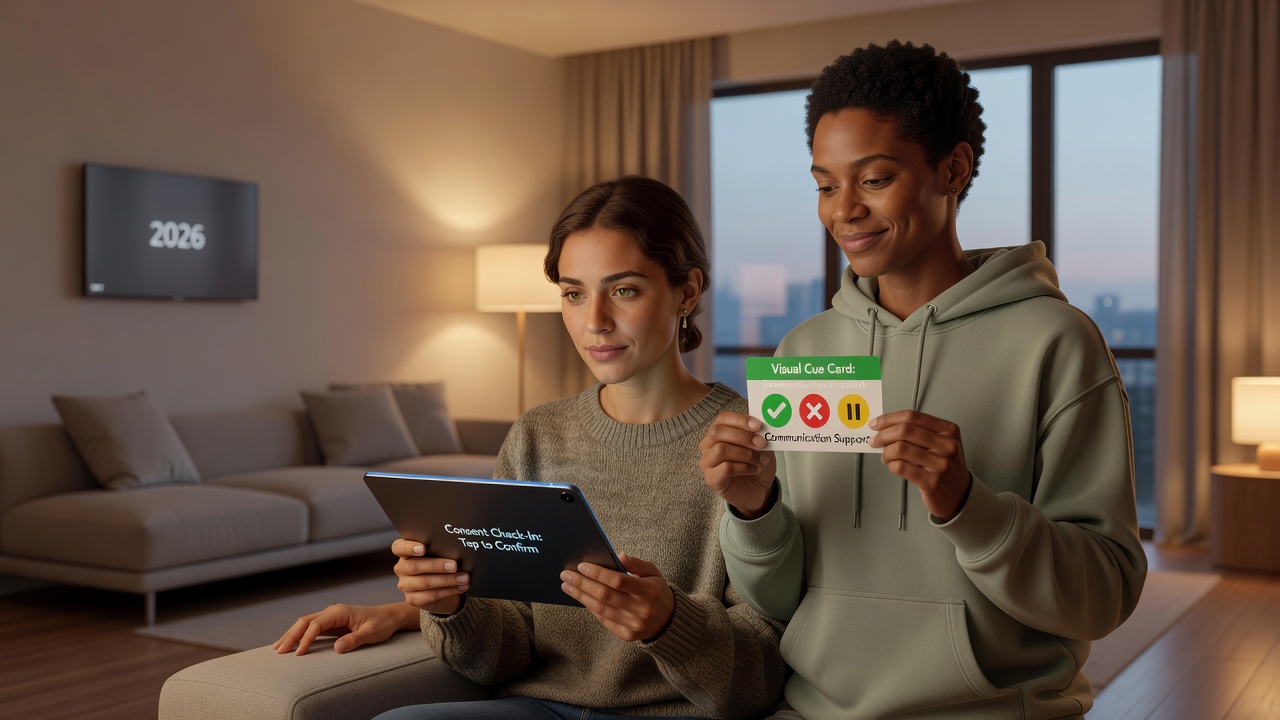
Neurotypical couples frequently depend on real-time verbal check-ins combined with nonverbal signals such as eye contact, smiling, or leaning in. These methods assume shared interpretations of social cues, which may not hold true in neurodiverse pairings. For example, a neurotypical partner might interpret a brief pause as hesitation, while their autistic partner uses the pause to process sensory overload before responding positively. Neurodiverse approaches shift toward explicit, pre-agreed systems that reduce ambiguity. Real-world examples include one couple using a shared color-coded app where green signals full enthusiasm, yellow indicates a need for adjustment, and red means immediate stop. Another pair replaced spontaneous touch with a pre-discussed menu of activities reviewed at the start of each evening. These contrasts highlight how neurodiverse strategies emphasize preparation and documentation over improvisation, leading to fewer miscommunications and stronger emotional security.
Recognizing Unique Cues and Signals
Identifying personal cues requires collaborative mapping sessions where both partners list their individual indicators of comfort, excitement, or boundary crossing. Sensory needs play a central role: one partner may find bright lights or certain textures overwhelming during intimate moments, signaling a need to pause through specific phrases or gestures rather than facial expressions. Another might use stimming behaviors like hand-flapping as a positive sign of engagement, not distress. Couples benefit from creating personalized cue dictionaries stored in a shared digital note. For instance, a couple might agree that tapping the shoulder twice means "slow down" while a gentle squeeze indicates "continue with enthusiasm." Avoiding assumptions means regularly verifying interpretations instead of guessing based on past experiences. This practice prevents erosion of trust and encourages partners to advocate for their authentic responses.
Structured Scripts for Relationship Talks
Pre-written scripts lower anxiety during boundary discussions by providing predictable language and reducing the pressure of inventing words on the spot. Effective scripts often incorporate rating scales or multiple-choice options. An example script for a weekly check-in could read: "Let's review our current boundaries. On a scale of 1 to 10, how comfortable do you feel with initiating touch without prior notice? What adjustments would make this a 9 or 10?" Another script addresses sensory changes: "My sensory profile has shifted this month due to increased work stress. Can we update our list of preferred lighting and music settings?" These tools transform potentially overwhelming conversations into structured, productive exchanges that both partners can prepare for in advance.
Integrating 2026 Digital Aids for Ongoing Consent
Digital tools have advanced to support asynchronous and visual consent management. Shared apps allow partners to log preferences, update boundaries after sensory changes, and receive gentle reminders for monthly reviews. Features such as emoji-based check-ins or voice-to-text options accommodate varying communication strengths. For couples navigating long-distance elements or busy schedules, these aids maintain continuity without requiring constant face-to-face talks. Integration works best when both partners agree on the tool's role as a supplement to in-person understanding rather than a replacement. Regular audits ensure the digital system reflects current realities and does not become another source of rigidity.
4-5 Practical Steps for Tailored Consent
- Schedule dedicated check-in times using shared calendars to ensure consistency without surprise discussions that could trigger anxiety.
- Create personalized cue lists together in a shared document, including sensory triggers, preferred signals, and examples from daily life.
- Practice role-play scenarios in low-stakes settings to test new scripts and refine them based on real feedback.
- Review boundaries monthly with visual rating scales or charts that allow quick updates when needs evolve.
- Incorporate sensory-friendly environments during discussions, such as dim lighting, comfortable seating, and noise-reducing headphones if helpful.
Building Trust Without Assumptions
Trust grows through consistent verification rather than assumed understanding. Partners should adopt a "curious instead of certain" mindset, asking clarifying questions even when they believe they know the answer. This approach acknowledges that neurodiverse experiences can fluctuate daily due to factors like fatigue, environment, or medication changes. Journaling individual reflections after intimate encounters and sharing summaries during check-ins further reinforces transparency. Over time, these habits replace guesswork with reliable patterns of mutual respect.
Comparison Table: Verbal vs Alternative Methods
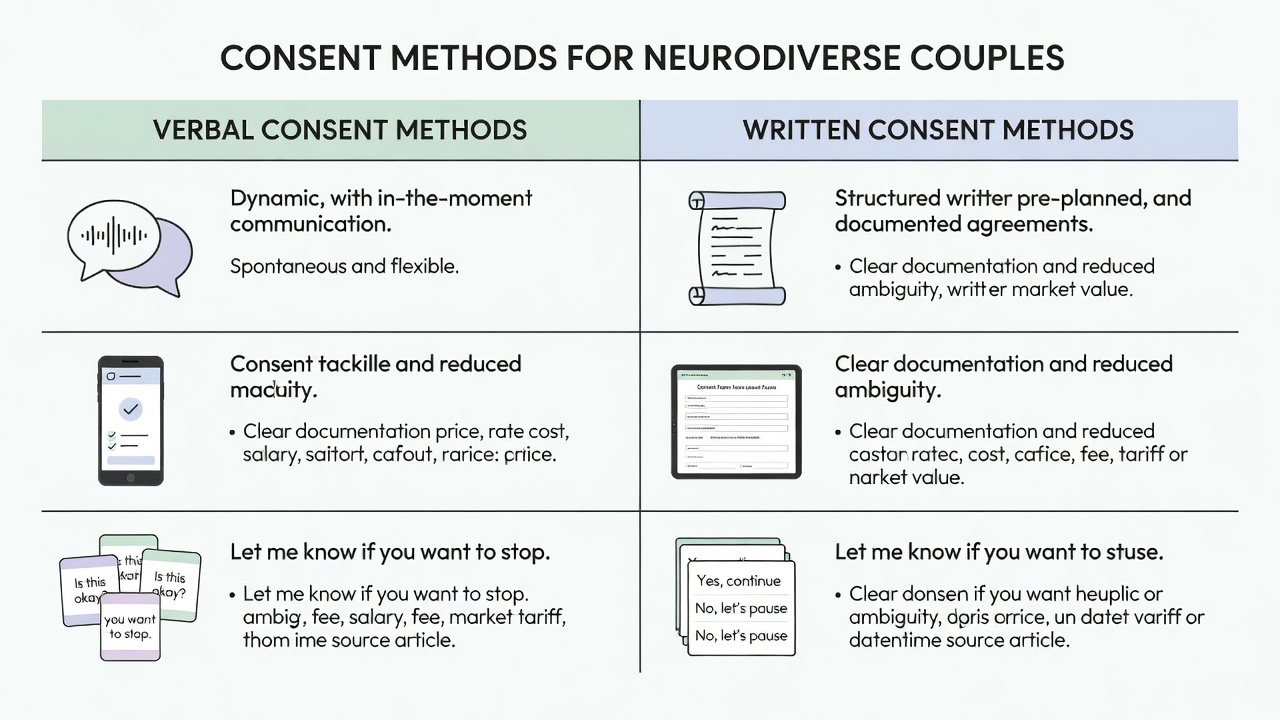
| Method Type | Verbal Approach | Alternative Approach |
|---|---|---|
| Check-ins | Spoken questions during intimacy | Written notes, app-based emojis, or color-coded signals |
| Boundary setting | Real-time conversation | Pre-planned visual boards or shared digital documents |
| Cue recognition | Interpreting tone, gestures, and facial expressions | Explicit agreed signals like taps, lights, or pre-defined phrases |
| Follow-up discussions | Immediate verbal debrief | Asynchronous text summaries or voice notes |
FAQ: Common Challenges in Sex Communication
How do we handle mismatched energy levels?
Use scheduled low-pressure talks and respect individual recovery needs after overstimulation. One partner might prefer morning discussions while the other needs evening quiet time; compromise by alternating formats or using written updates when energy is low.
What if one partner struggles with eye contact?
Shift to side-by-side conversations, text-based exchanges, or focusing on an object together to maintain comfort while still engaging in meaningful dialogue about consent and boundaries.
Are digital tools reliable for consent?
Yes, when used consistently as a supplement to mutual understanding. They provide records and reminders but should never replace direct confirmation of ongoing willingness.
How can we adapt during periods of high stress or change?
Implement temporary simplified scripts and increase check-in frequency. Stress often alters sensory thresholds, so updating cue lists promptly prevents unintended discomfort.
What resources support further learning?
Consult established organizations for foundational guidance on inclusive communication practices that complement neurodiverse-specific strategies.
Conclusion
By embracing structured, inclusive strategies, neurodiverse couples strengthen trust and intimacy while honoring each partner's unique neurology. Resources like the World Health Organization and CDC offer foundational guidance on inclusive health communication that pairs well with these tailored approaches. Consistent application of these 2026 strategies transforms consent from a potential obstacle into a foundation for deeper connection.

No comments yet. Be the first!