 Spicy Trip

Why a Consent Language Toolkit Matters in 2026
Enthusiastic consent goes far beyond a simple yes or no. In today's relationships, couples need precise, ongoing communication to ensure intimacy feels safe, exciting, and mutually desired. This toolkit provides fresh phrases and scripts that move past basic models, helping partners express desires, check boundaries, and respect limits with clarity and warmth. As societal conversations around intimacy continue to evolve, many couples find that outdated approaches leave room for misinterpretation and discomfort. A dedicated language toolkit addresses these gaps by offering adaptable phrases that promote mutual enthusiasm at every stage.
Research from leading health organizations shows that clear verbal consent reduces misunderstandings and strengthens emotional bonds. As relationship dynamics evolve, having a shared vocabulary becomes essential for long-term satisfaction. Couples who regularly practice consent-focused communication report higher levels of trust and satisfaction. This guide expands on those foundations with practical, categorized examples designed specifically for 2026 relationship contexts.
Understanding Enthusiastic Consent in Modern Relationships
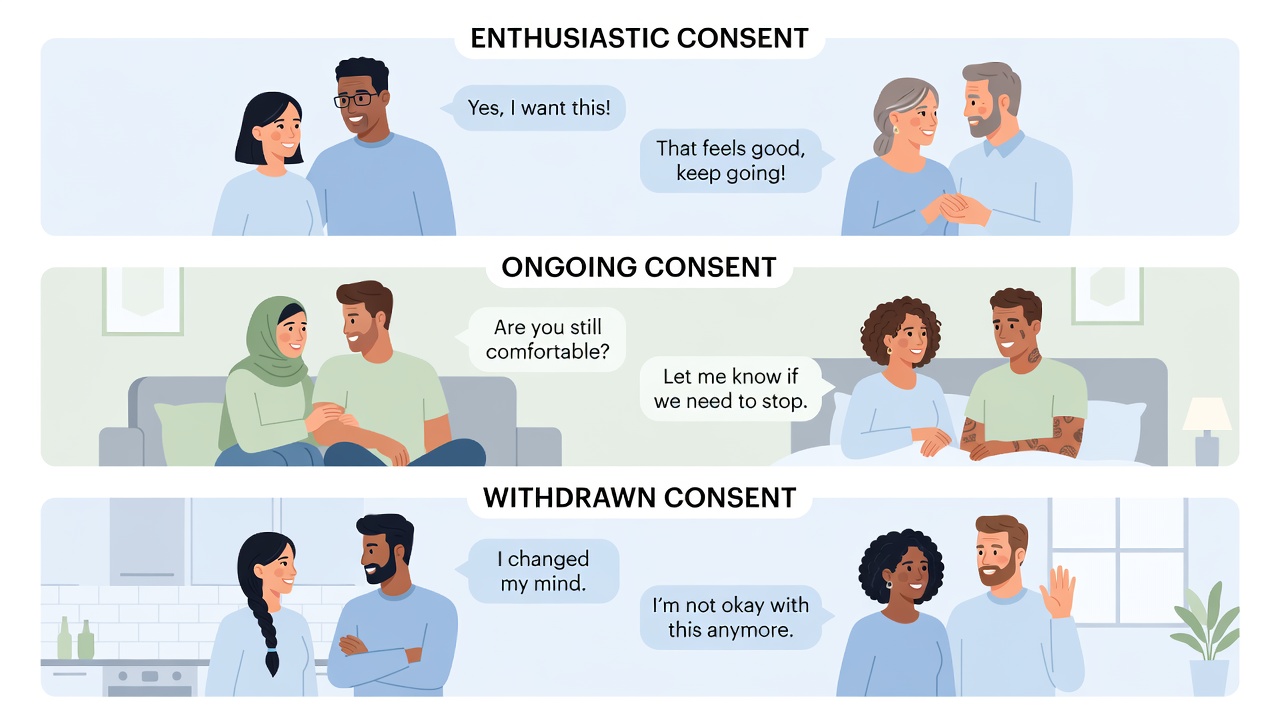
Enthusiastic consent means actively seeking and confirming a partner's genuine excitement rather than mere absence of refusal. It requires continuous dialogue because desires can shift moment to moment. Unlike older models that focused on permission alone, this approach emphasizes ongoing affirmation. Partners benefit from recognizing that consent is not a one-time checkbox but a dynamic process that deepens connection when handled thoughtfully.
Implementing this mindset helps address common challenges such as performance anxiety or cultural differences in expressing needs. By building a toolkit of phrases, couples create a safe space where both individuals feel empowered to speak up without fear of judgment.
12 Categorized Phrase Examples for Intimacy
These phrases are grouped into three stages: initiating, checking in, and respecting boundaries. Use them as starting points and adapt to your voice. Each category includes four carefully crafted examples that sound natural in real conversations.
Initiating Intimacy
Starting an intimate moment sets the tone for everything that follows. These phrases invite collaboration rather than assumption.
- "I'd love to explore this with you if you're into it—what do you think?" This opens the door while giving clear space for a no.
- "How would you feel about slowing things down and trying something new together?" It signals interest in shared experimentation.
- "I'm really drawn to you right now. Want to see where this leads?" A warm invitation that still seeks explicit agreement.
- "Let's start with kissing and check how we both feel before going further." This establishes a checkpoint from the beginning.
Checking In During Intimacy
Midway check-ins keep communication flowing and allow real-time adjustments.
- "Does this feel good, or would you like me to adjust anything?" Simple and direct, it encourages honest feedback.
- "I'm enjoying this—how about you? Any changes you'd like?" It models sharing your own experience first.
- "Still with me? Tell me what feels best right now." This phrase invites specific direction.
- "On a scale of one to ten, how's the pressure and pace for you?" A playful yet precise way to gather information.
Respecting Boundaries
When a boundary appears, graceful responses maintain respect and connection.
- "I hear you—let's pause or switch to something else." Immediate acceptance paired with an alternative.
- "No worries at all if that's not what you want; we can do whatever feels right." Reassurance reduces any sense of rejection.
- "Thank you for telling me. Let's try this instead." Gratitude reinforces that sharing limits is welcome.
- "I respect that completely. What would make you comfortable instead?" It keeps the conversation collaborative.
Step-by-Step Tips for Practicing New Language
Integrating new consent phrases takes intentional effort outside high-pressure moments. Begin by scheduling dedicated relationship talks in neutral settings such as during a morning walk or over a relaxed meal. Choose one phrase category per week and rehearse it aloud together, experimenting with different tones and body language. Record short voice notes to review later and identify what feels authentic. Progress to low-stakes physical touch scenarios, such as massages, where you can test phrases without full intimacy. After each practice session, debrief honestly about what worked and what felt awkward. Over several weeks, gradually introduce the language during actual intimate encounters. Keep a shared journal to track successful phrases and refine them as your relationship grows. Consistency matters more than perfection; even small improvements compound over time.
Verbal Versus Non-Verbal Cues: A Detailed Comparison
Verbal cues deliver unmatched precision because spoken words leave little room for misreading intent. They allow partners to confirm willingness explicitly and address nuances that body language alone cannot convey. In contrast, non-verbal cues such as sustained eye contact, relaxed posture, or reciprocal movements provide valuable context and emotional warmth when paired with words. However, relying solely on non-verbal signals risks misinterpretation, especially across cultural backgrounds or when one partner experiences anxiety. The most effective strategy combines both: speak clearly while observing enthusiastic physical responses. For example, a verbal "yes, keep going" accompanied by relaxed breathing creates stronger assurance than either cue in isolation. Couples should discuss personal non-verbal signals in advance to avoid assumptions.
Real-World Dialogue Samples
Sample 1 (Initiating): Partner A says, "I'd love to explore this with you if you're into it—what do you think?" Partner B replies, "Yes, that sounds exciting—let's start slow." The exchange establishes mutual excitement immediately.
Sample 2 (Checking In): During intimacy, Partner A asks, "Does this feel good, or would you like me to adjust anything?" Partner B responds, "A little softer would be perfect." The adjustment happens seamlessly without breaking connection.
Sample 3 (Boundary Respect): Partner B says they need to pause. Partner A answers, "I hear you—let's pause or switch to something else." The moment shifts to comfort without pressure.
Sample 4 (Ongoing Check): Later, Partner A checks again with "Still with me? Tell me what feels best right now." This reinforces that consent remains active throughout.
Common Pitfalls to Avoid
Many couples unintentionally undermine consent through subtle habits. Avoid assuming silence equals agreement; always seek verbal confirmation. Never follow a boundary statement with pressure such as repeated questions like "Are you sure?" Skip assuming that consent given earlier automatically applies to later activities. Do not treat past successful encounters as permanent templates. Finally, avoid interpreting enthusiastic body language as a substitute for words, particularly with new or neurodiverse partners. Recognizing these pitfalls early prevents misunderstandings and builds stronger habits.
Frequently Asked Questions
How can neurodiverse couples adapt these phrases? Break longer sentences into shorter statements, agree on signal words in advance, or use written notes before intimate moments to reduce verbal pressure.
What about cultural differences in expressing consent? Discuss family backgrounds and personal comfort levels during non-intimate talks. Adapt phrases to honor values while preserving explicit, ongoing agreement.
How often should couples revisit their consent toolkit? Review phrases quarterly or after major life changes to ensure the language still fits evolving needs and desires.
Where can I learn more about consent education? Visit World Health Organization resources on sexual health and Centers for Disease Control and Prevention guidelines for healthy relationships. Additional support appears at Planned Parenthood educational sections.
Conclusion
Building a consent language toolkit transforms intimate conversations into opportunities for deeper connection. With these phrases, detailed practice steps, cue comparisons, and awareness of pitfalls, couples can create safer, more joyful experiences in 2026 and beyond. Regular use strengthens trust and keeps communication fresh throughout every stage of a relationship.


No comments yet. Be the first!