 Spicy Trip

Why Consent Conversations Matter in 2026
In today's evolving landscape of relationships and intimacy, clear communication about consent isn't just polite—it's essential. With movements like #MeToo still influencing cultural norms and technology enabling more virtual and hybrid encounters, misunderstandings in sex talks can lead to emotional harm, trust erosion, and even legal issues. This guide dives deep into 10 common consent red flags, providing real-life examples, relationship impacts, and actionable fixes rooted in enthusiastic consent principles.
Enthusiastic consent means all parties are actively excited and affirming "yes" without pressure or ambiguity. According to experts at RAINN, ignoring these signals can perpetuate cycles of discomfort. Whether you're in a new fling or long-term partnership, spotting and addressing red flags early fosters safer, more fulfilling intimacy. Let's break it down.
The 10 Key Consent Red Flags in Sex Talks
Here are the top red flags to watch for during intimate discussions. Each includes a scenario, potential fallout, and a fix to pivot toward positive communication.
1. Ignoring Verbal Boundaries
Example: Your partner says, "I'm not into that tonight," but you push with, "Come on, just try it."
Impact: This erodes trust, leading to resentment and avoidance of future intimacy. Relationships may become one-sided, breeding anxiety.
Fix: Pause and affirm: "Okay, noted. What are you feeling right now?" This models respect and invites reciprocity.
2. Assuming Silence is Consent
Example: No explicit "yes," so you proceed assuming it's fine.
Impact: Can cause trauma, as many freeze in uncomfortable moments. Long-term, it damages emotional safety nets.
Fix: Seek active affirmation: "Is this good for you?" Enthusiastic consent requires a clear, eager response.
3. Using Guilt or Pressure Tactics
Example: "If you loved me, you'd do this."
Impact: Creates power imbalances, fostering codependency or resentment. Partners may comply out of fear, not desire.
Fix: Reframe to shared excitement: "I'd love if you're into it too—what do you think?"
4. Dismissing Non-Verbal Cues
Example: They pull away or tense up, but you say, "Relax, it's fine."
Impact: Invalidates feelings, leading to shutdowns and intimacy avoidance. Over time, it signals emotional neglect.
Fix: Check in gently: "You seem hesitant—want to pause?" Body language is a primary consent communicator.
5. Alcohol or Substance Excuses
Example: "You were drunk, so it was okay."
Impact: Blurs lines of capacity, risking regret or assault claims. Trust fractures permanently in many cases.
Fix: Prioritize sobriety: "Let's revisit when we're both clear-headed." Consent must be informed and ongoing.
6. Changing Topics to Avoid No's
Example: After a "no," you switch to, "But what about last time?"
Impact: Feels manipulative, causing partners to withhold honesty to avoid arguments.
Fix: Honor the boundary: "Understood, no pressure. Let's talk desires instead."
7. Assuming Past Yes Means Always
Example: "You liked it before, so now too."
Impact: Ignores evolving preferences, leading to boredom or discomfort in stale dynamics.
Fix: Ask anew: "Feeling that again tonight?" Consent is not a contract.
8. Group Pressure in Social Settings
Example: Friends egging on, "Everyone's doing it!"
Impact: Amplifies peer influence, risking regret in poly or party scenarios.
Fix: Private check: "Just us—what's your comfort level?"
9. Vague or Leading Questions
Example: "You don't want to, right?" (trapping into agreement).
Impact: Stifles true expression, building unspoken tensions.
Fix: Open-ended: "What turns you on right now?"
10. Post-Encounter Regret Minimization
Example: "It wasn't that bad, stop overreacting."
Impact: Gaslights, deepening emotional scars and isolation.
Fix: Validate: "I'm sorry if it crossed a line—how can I make it right?"
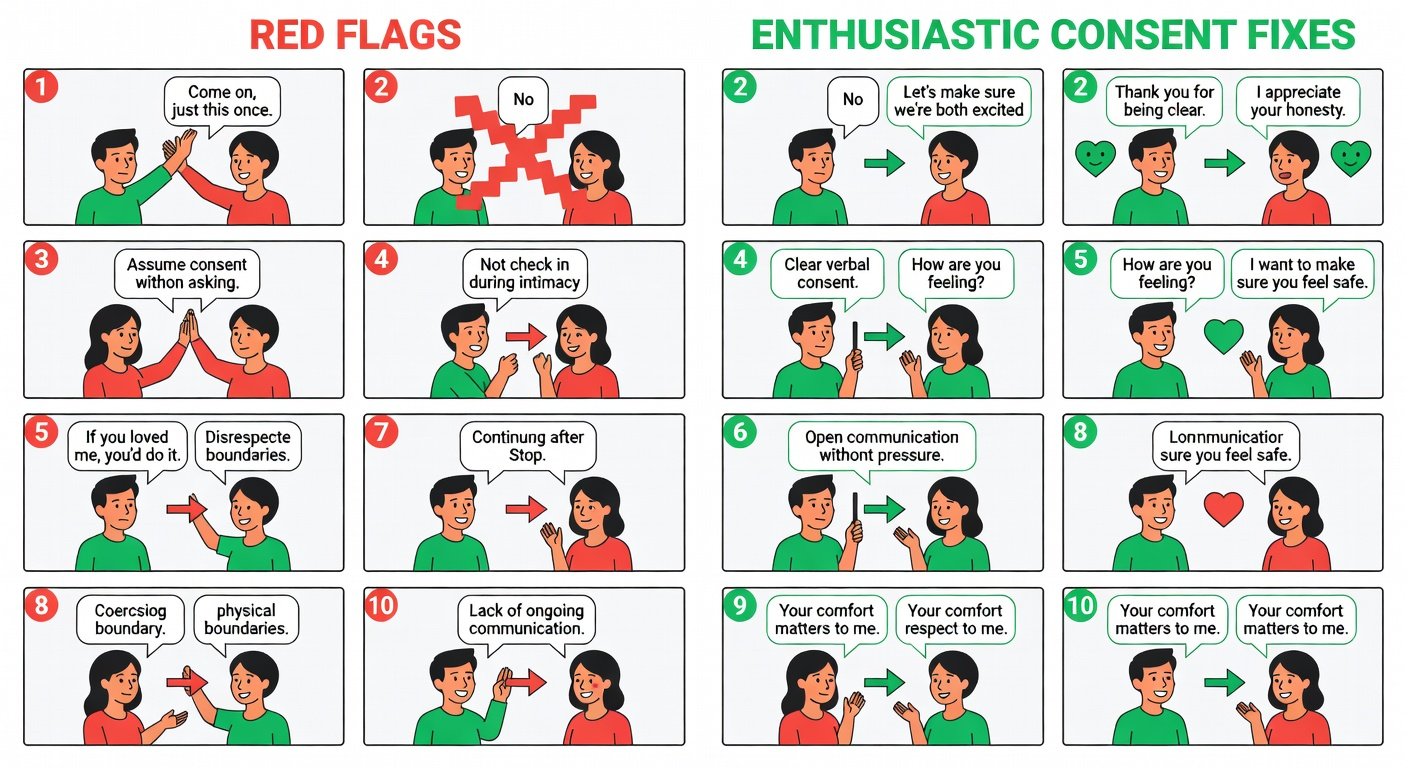
Step-by-Step Strategies for Initiating Honest Relationship Talks
- Choose the Right Moment: Pick a low-stress time, like a quiet evening walk, not mid-intimacy.
- Set a Positive Tone: Start with, "I value our connection and want us both thrilled."
- Share Vulnerably First: "I've been thinking about my boundaries—here's what I need."
- Listen Actively: No interrupting; paraphrase: "So you're saying..."
- Co-Create Rules: Brainstorm safe words or signals together.
- Follow Up: Revisit in a week: "How's that working for you?"
For more on healthy dialogue, check Planned Parenthood's resources on consent.
Practical Phrases for Communication in Sex
- "Does this feel good?" – Real-time check.
- "Green for go, yellow for slow, red for stop." – Traffic light system.
- "I'm excited if you are—thoughts?" – Enthusiasm builder.
- "Not tonight, but maybe [alternative]." – Graceful pivot.
- "Tell me more about what you want." – Invitation to lead.
These phrases normalize check-ins, making consent sexy and routine.
Quick Self-Quiz for Couples: Test Your Consent Savvy
Answer yes/no together, then discuss:
- Do we check in verbally before new acts? ( )
- Have we defined non-verbal signals? ( )
- Does a past "yes" ever override a current "no"? (No!)
- Can we pause anytime without judgment? ( )
- Do we debrief after sessions? ( )
- Score 5/5? You're golden. Below? Use this as a talk starter.
Pro Tips for Ongoing Check-Ins
- Schedule monthly "intimacy audits" over coffee.
- Use apps for anonymous feedback if shy.
- Read together: Books like "Come As You Are" by Emily Nagoski.
- Practice in low-stakes scenarios, like cuddling.
- Know when to seek therapy—WHO emphasizes professional support for persistent issues.
In 2026, mastering these skills isn't optional—it's the foundation of ethical, joyful intimacy. By spotting red flags and embracing fixes, you build unbreakable trust. Start the conversation today for deeper connections tomorrow.


No comments yet. Be the first!