 Spicy Trip
Understanding Sexual Consent: The Foundation of Healthy Intimacy
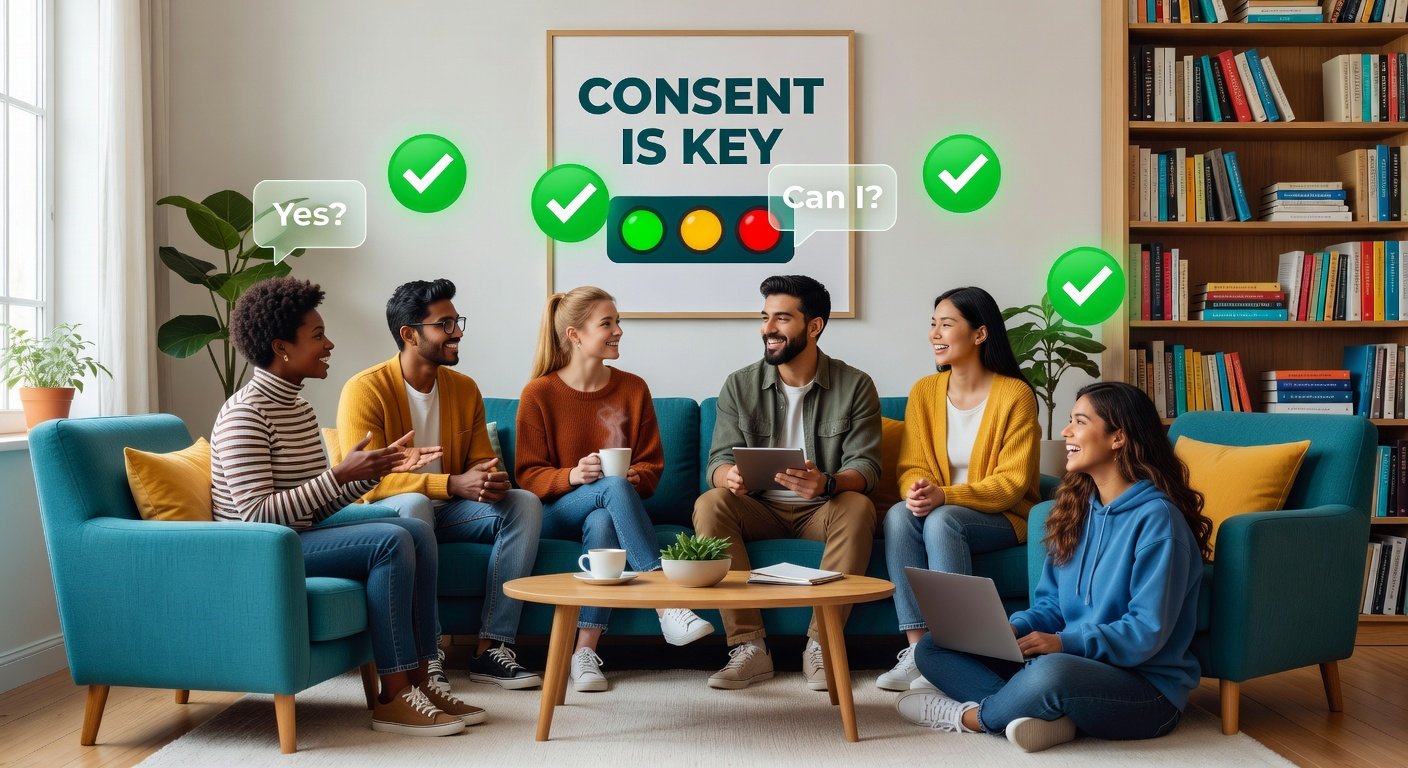
In 2026, sexual consent remains a cornerstone of respectful, fulfilling intimate relationships. As society evolves with greater emphasis on sex-positive education, grasping the basics of consent is essential for everyone—from beginners to experienced partners. This guide dives deep into affirmative consent models, the role of ongoing communication, and practical tools to foster safe interactions. We'll explore real-world examples, common barriers, and checklists to empower you in promoting sexual health and mutual respect.
Sexual consent isn't just a one-time checkbox; it's an enthusiastic, continuous agreement that enhances pleasure and trust. According to experts, clear consent reduces risks of misunderstandings and supports emotional well-being. Whether you're navigating casual encounters or long-term partnerships, these principles apply universally.
What Is Affirmative Consent?
Affirmative consent, often called "yes means yes," shifts the focus from "no means no" to requiring explicit, positive agreement. This model, widely adopted in educational programs, demands verbal or clear non-verbal enthusiasm before any sexual activity. It's revocable at any time, emphasizing autonomy.
Key elements of affirmative consent include:
- Enthusiasm: A genuine "yes" driven by desire, not obligation or pressure.
- Capacity: All parties must be sober, mentally capable, and free from coercion.
- Specificity: Consent for one act (e.g., kissing) doesn't imply permission for others (e.g., intercourse).
- Ongoing Nature: Check-ins ensure comfort throughout.
For more on legal standards, visit the RAINN website, a leading authority on sexual violence prevention.
The Power of Ongoing Communication in Intimacy
Consent thrives on dialogue. Pre-sex talks set the stage, but mid-encounter check-ins maintain it. Phrases like "Is this okay?" or "Do you like this?" normalize vulnerability and build connection.
Why it matters for sexual health: Open communication correlates with lower STI rates and higher satisfaction, per studies from health organizations. It also prevents regret by aligning expectations early.
Practical Techniques for Discussing Boundaries
Start conversations outside the bedroom to reduce pressure. Use these steps:
- Choose a Neutral Time: Over coffee or a walk, not mid-foreplay.
- Be Direct: "What are your hard limits? Soft limits?" Share yours first to model openness.
- Use Frameworks: Tools like the traffic light system (green = more, yellow = slow, red = stop) simplify signals.
- Listen Actively: Validate responses without judgment.
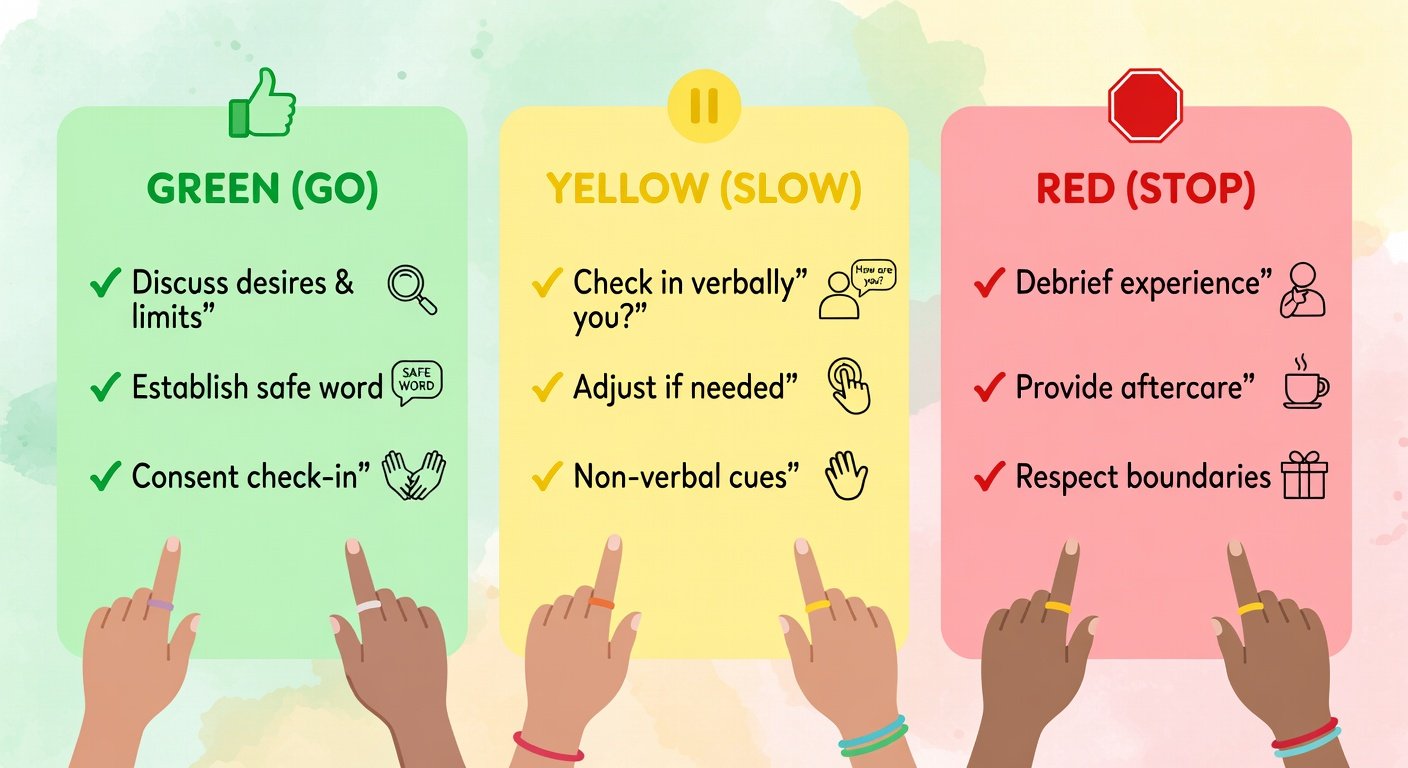
Incorporate safe words for non-verbal cues. Popular choices: "Red" for stop, "Yellow" for pause/adjust, "Green" for go. Practice them in low-stakes scenarios to build familiarity.
Common Barriers to Consent and How to Overcome Them
Beginners often face hurdles like fear of rejection, cultural silence around sex, or alcohol's influence. Here's how to address them:
- Fear of Awkwardness: Reframe talks as sexy foreplay. Example: "Tell me what turns you on—it's hot hearing your desires."
- Power Imbalances: In age-gap or hierarchical dynamics, ensure equality by affirming, "You have full say here."
- Ambiguity from Media: Counter rom-com tropes where silence equals consent—insist on clarity.
- Intoxication: Err on caution; no consent if impaired. Planned Parenthood emphasizes this in their resources: check their consent page.
Real-World Examples of Consent in Action
Scenario 1: Date Night. Alex asks, "Can I kiss you?" Jordan nods enthusiastically. Later, Alex checks, "Want to move to the bedroom?" Jordan says, "Yes, but slowly." Clear wins.
Scenario 2: Group Play. In a consensual multi-partner setup, everyone verbalizes boundaries upfront. One uses "yellow" mid-act; activity pauses respectfully.
Scenario 3: Revocation. During intercourse, Sam says, "Red." Partner stops immediately, cuddles, and discusses—no pressure to resume.
These illustrate consent's fluidity, preventing harm and enhancing trust.
Checklists for Healthy, Respectful Interactions
Use these scannable tools before, during, and after intimacy:
Pre-Intimacy Checklist
- Are we both sober and enthusiastic?
- Have boundaries been discussed?
- Safe words established?
- Protection (condoms, PrEP) ready?
During Checklist
- Regular check-ins?
- Responding to cues?
- Comfort levels good?
Post-Intimacy Checklist
- Debrief: "How was that for you?"
- Any adjustments needed next time?
- Emotional aftercare provided?
For global sexual health insights, refer to the WHO's sexual health page.
Consent's Impact on Sexual Health and Relationships
Beyond ethics, consent boosts outcomes. Research links it to reduced anxiety, better STI prevention via honest talks, and stronger bonds. In 2026, apps and workshops integrate these models, making education accessible.
Mistakes to Avoid:
- Assuming past consent carries over.
- Ignoring non-verbal discomfort.
- Pressuring for reasons or photos.
FAQs: Sexual Consent Essentials
Q: Can consent be non-verbal?
A: Yes, if clear and enthusiastic (e.g., eager nod), but verbal is safest.
Q: What if someone freezes?
A: Pause, check in gently. Freezing isn't consent—prioritize safety.
Q: Does consent expire?
A: Yes, always confirm anew.
Q: How to teach kids?
A: Age-appropriate talks on body autonomy from early ages.
Conclusion: Empower Yourself with Consent Knowledge
Mastering sexual consent transforms intimacy into a shared joyride of respect and pleasure. By embracing affirmative models, communicating openly, and using tools like safe words and checklists, you sidestep barriers and nurture health. Start today—your future self (and partners) will thank you. Share this guide to spread sex ed awareness in 2026.

No comments yet. Be the first!