 Spicy Trip

Why Consent Conversations Matter on First Dates in 2026
Entering new relationships in 2026 means embracing clear, enthusiastic consent from the outset. Singles today seek to reduce uncertainty and build trust quickly, making early boundary discussions essential rather than optional. These conversations help establish mutual respect, prevent misunderstandings, and create a foundation for healthier intimacy. Research from leading health organizations shows that open dialogue about consent correlates with more satisfying connections and fewer conflicts later on.
Many people worry that bringing up consent will feel awkward or ruin the mood, but the opposite is often true. When handled thoughtfully, these talks demonstrate emotional maturity and shared values, which can actually enhance attraction. This guide dives deep into timing, phrasing, sample scripts, response handling, red flags, listening techniques, cue comparisons, common pitfalls, and daily habits to make consent communication second nature.
Timing Your Consent Talks Effectively
Choosing the right moment prevents discomfort and maximizes receptiveness. Ideal windows include mid-date pauses, such as during a relaxed coffee break or while strolling after a meal. These settings allow for natural flow without the intensity of arrival or departure moments. Avoid initiating talks during high-energy activities or when either person seems distracted by external factors like loud environments.
Phrasing That Feels Natural
Start with curiosity rather than demands. Phrases like "I'm enjoying getting to know you—what are your thoughts on how we check in about comfort?" invite collaboration. Another effective opener is "I value clear communication in new connections. How do you usually handle talking about boundaries?" This positions the discussion as a positive step forward instead of a test.
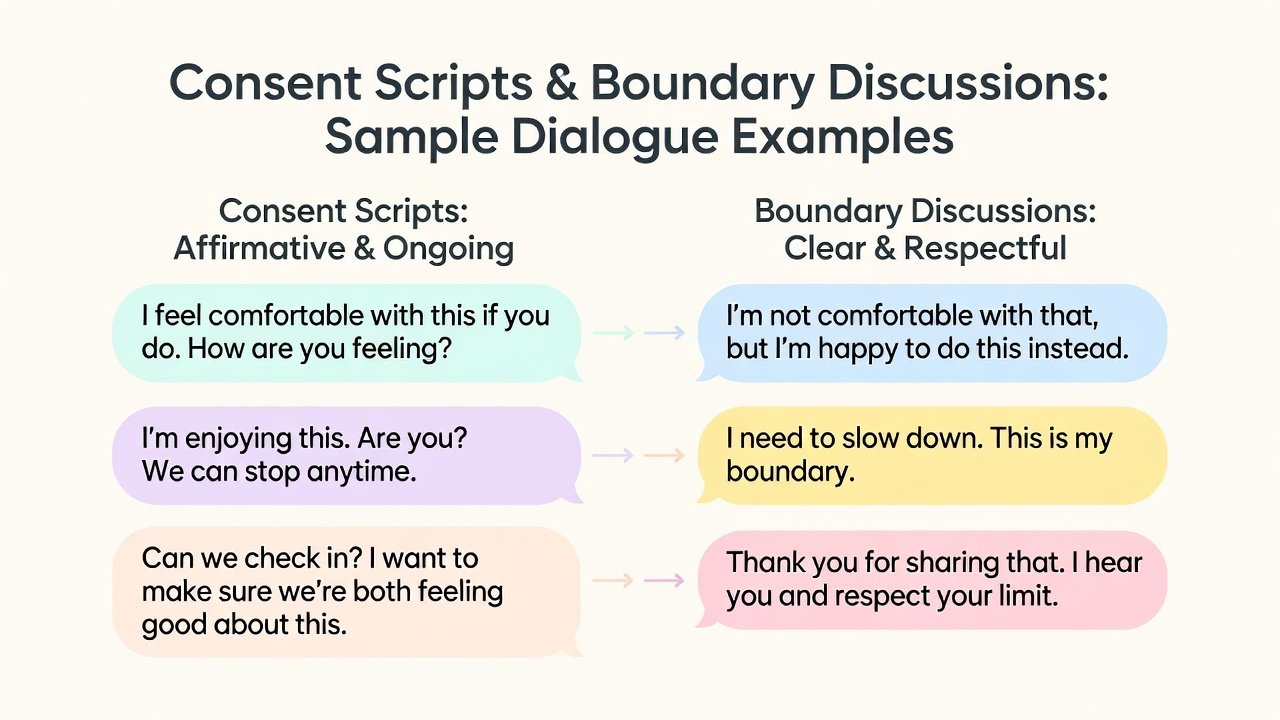
Sample Scripts for Discussing Boundaries
Adapt these examples to your style and situation:
- "Before we get closer physically, I wanted to share that enthusiastic consent matters a lot to me. What feels good for you right now?"
- "This date has been great so far. Can we talk briefly about what kinds of touch or affection we're both open to?"
- "I prefer verbal check-ins during intimate moments—does that align with how you like to communicate?"
- "Let's make sure we're on the same page: are there any activities or topics that are off-limits for you tonight?"
Practice these in low-stakes settings to build fluency. Tailor them by referencing something specific from your date, such as a shared interest, to keep the tone personal and warm.
Handling Different Responses
Positive responses often include questions back or enthusiastic agreement. Build on this by exploring specifics together. Hesitant replies may signal nervousness; respond with reassurance like "No pressure at all—this is just about making sure we both feel good." Dismissive or evasive answers warrant careful attention, as they might indicate differing priorities around respect. In such cases, gracefully redirect the conversation or end the date early if needed.
Recognizing Red-Flag Indicators
Stay alert for patterns that undermine consent culture. Common indicators include:
- Deflecting the topic with jokes or subject changes
- Pressuring to skip discussions in favor of "just going with the flow"
- Minimizing your concerns or labeling them as overthinking
- Expressing frustration when boundaries are mentioned
- Comparing your approach unfavorably to past partners
These signs suggest potential incompatibility and should prompt reevaluation of the connection.
Practicing Active Listening Skills
Active listening forms the backbone of successful consent talks. Begin by giving full attention without interrupting. Paraphrase key points, such as "It sounds like you're saying you prefer slow progression—did I get that right?" Follow up with clarifying questions to confirm understanding. Regular practice through journaling or role-playing with friends strengthens this skill over time.
Verbal vs Nonverbal Cues: Key Comparisons
Verbal cues deliver explicit clarity and should always take precedence. Direct statements like "Yes, I want to continue" or "I'd rather not right now" leave no room for doubt. Nonverbal cues, including eye contact, posture, and facial expressions, provide valuable context but can be misinterpreted due to cultural differences or personal habits. Never assume consent from body language alone; always cross-reference with words. This layered approach reduces risk and builds stronger mutual understanding.
Common Mistakes to Avoid
Many newcomers rush the timing or use accusatory phrasing that puts the other person on defense. Another frequent error involves treating consent as a one-time checkbox rather than an ongoing dialogue. Over-relying on assumptions from previous dates or media portrayals also leads to missteps. Instead, approach each interaction fresh and invite ongoing feedback.
FAQ: Addressing Common Fears
Isn't this conversation too serious for a first date?
Actually, many 2026 daters report that thoughtful consent talks ease tension and signal emotional intelligence, often leading to more relaxed and enjoyable evenings overall.
What if they react badly or get defensive?
A negative reaction provides valuable early insight into compatibility. It allows you to exit gracefully and avoid investing further in mismatched dynamics.
How do I bring it up without killing the vibe?
Frame it positively around mutual enjoyment and shared respect. Light, collaborative language keeps energy high while addressing important topics.
Should I prepare a script in advance?
Having a few go-to phrases memorized helps, but genuine curiosity and flexibility matter more than perfect wording.
What if cultural or personal differences affect how consent is expressed?
Acknowledge differences openly and ask clarifying questions to bridge gaps, ensuring both parties feel heard and respected.
Actionable Micro-Habits to Start Today
Integrate these small practices immediately for lasting improvement:
- Reflect daily on your personal boundaries for five minutes each morning.
- Role-play consent scripts aloud during solo walks or commutes.
- After every social interaction, journal one observation about communication dynamics.
- Read one short article weekly from trusted sources on relationship skills.
- Practice paraphrasing statements in casual conversations to sharpen listening.
These habits compound quickly, turning consent discussions into a natural strength. For additional guidance on healthy relationships and consent education, consult resources from Planned Parenthood, RAINN, and CDC.
Conclusion
Mastering first-date consent talks in 2026 empowers singles to create respectful, exciting connections from the start. By focusing on timing, clear phrasing, active listening, and ongoing habits, you reduce awkwardness while prioritizing enthusiastic agreement. Apply these strategies consistently, and watch your relationships flourish with greater trust and clarity.

No comments yet. Be the first!