 Spicy Trip

Introduction to Kink Consent Protocols
Enthusiastic consent forms the foundation of safe, pleasurable kink and BDSM experiences in 2026. Practitioners now demand structured protocols that extend far beyond basic yes-or-no discussions. These frameworks prioritize ongoing, affirmative agreement at every stage of play, from initial negotiation to post-scene reflection. This comprehensive guide provides actionable boundary scripts, detailed negotiation templates, and recurring review processes designed specifically for power-exchange dynamics. Whether you are new to kink or refining long-term practices, these tools help create clearer communication and deeper trust.
Pre-Scene Boundary Mapping
Effective pre-scene discussions begin with thorough mapping of physical, emotional, and psychological limits. Partners collaborate on a shared document that catalogs hard limits, soft limits, and enthusiastic yes activities. Open-ended questions such as “What sensations feel exciting today?” and “Which activities require extra negotiation?” reveal important nuances that simple checklists often miss. This process accounts for fluctuating energy levels, recent stressors, and evolving desires that can shift even within a single week.
Step-by-Step Boundary Mapping Process
- Schedule a dedicated, non-sexual conversation at least 24 hours before any planned play to allow time for reflection.
- Review each person’s current physical health, mental state, and any medications that might affect sensation or judgment.
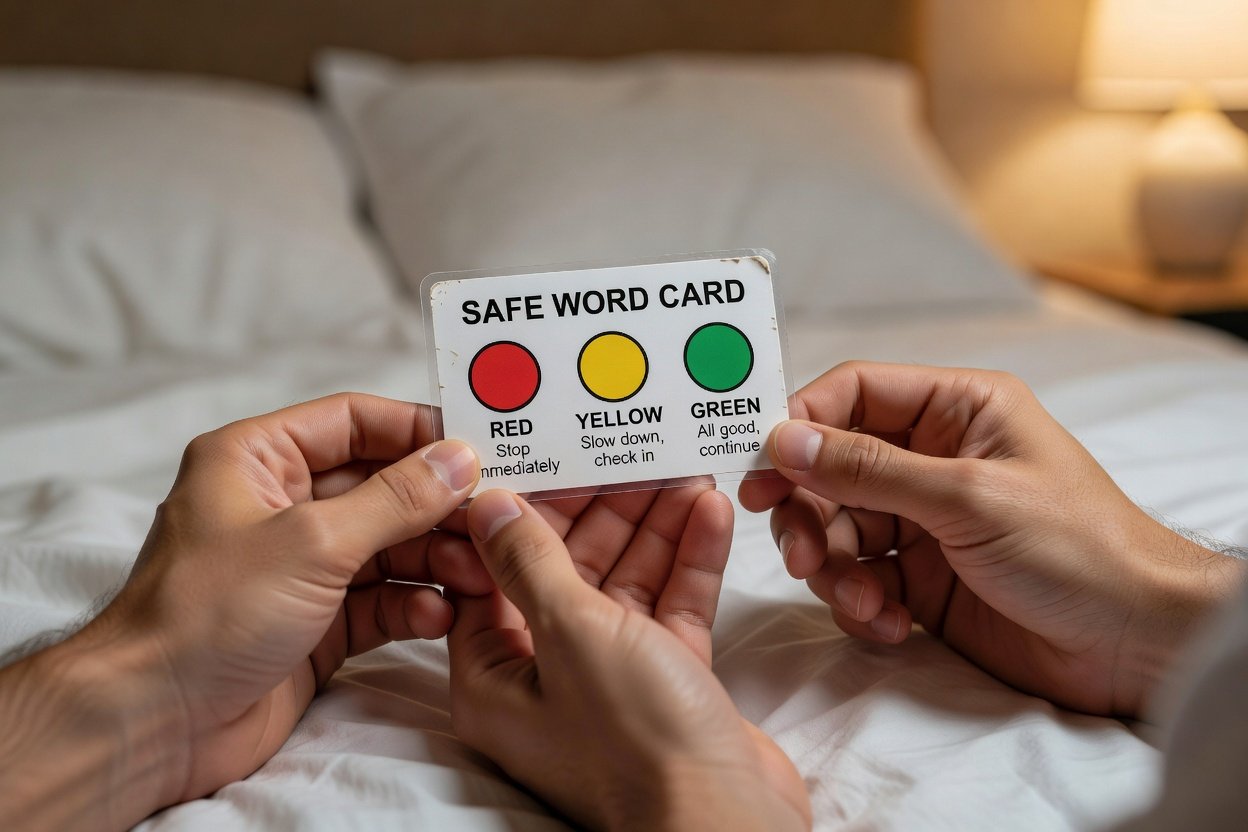
- Document limits using a traffic-light system: green for full enthusiastic consent, yellow for caution with conditions, and red for hard stops that require no further discussion.
- Identify specific triggers, aftercare needs, and emergency contact preferences in writing for quick reference during intense scenes.
- Revisit the map immediately before the scene starts to confirm nothing has changed since the initial talk.
This structured approach dramatically reduces miscommunication and builds a foundation of explicit trust before any physical activity begins.
Dynamic Safe Word Systems
Traditional safe words like “red” remain essential, yet modern 2026 protocols frequently incorporate layered signals for more nuanced communication during play. A robust three-tier system includes “yellow” for slowdown or adjustment requests, “red” for immediate and complete stop, and a non-verbal gesture such as tapping twice or dropping an object when speech is restricted by gags or positions. Many couples also add a “green” check-in prompt that the dominant partner uses to confirm ongoing comfort without breaking immersion.
Integrate verbal or visual check-ins every 10–15 minutes during extended scenes. A sample script might be: “On a scale of one to ten, how is your energy and comfort level right now, and is there anything you want adjusted?” This keeps consent active and responsive to real-time changes in physical or emotional states. Practitioners can further customize signals based on scene type, such as using colored cards or app-based notifications for long-distance or tech-integrated play.
Aftercare Consent Check-Ins
Consent does not conclude when the scene ends. Structured aftercare discussions scheduled at 30 minutes, 4 hours, and 24 hours post-play help process the experience and reinforce emotional safety. Useful questions include: “Did anything feel unexpectedly intense or uncomfortable?” “Would you like to adjust any boundaries before our next session?” and “How are you feeling physically and emotionally right now?”
These timed check-ins allow partners to address delayed reactions, such as sub-drop or unexpected soreness, and adjust future protocols accordingly. Different individuals require different aftercare styles—some prefer quiet cuddling while others need verbal processing or practical assistance like hydration and snacks. Documenting preferences in advance prevents guesswork during vulnerable moments.
Real-Life Power-Exchange Discussion Examples
Consider this extended negotiation for a dominance-submission dynamic: Dominant: “Tonight I would like to incorporate light impact play on your thighs using a soft flogger. How does that align with your current limits and energy?” Submissive: “Green for thighs with the flogger, but I want a yellow check-in after the first five strikes and a full stop if my breathing changes. I also need 15 minutes of quiet holding afterward.” Such precise language prevents assumptions and honors the fluid nature of consent. Another example involves rope bondage: both partners discuss circulation checks, time limits per tie, and escape routes before any rope touches skin.
Comparing Kink Protocols with Everyday Intimacy Practices
Everyday sexual encounters often rely on implicit cues and assumed consent, while kink protocols demand explicit, repeated affirmation throughout the experience. Both styles benefit from clear communication, yet kink practices offer transferable tools such as scheduled boundary reviews that can enhance vanilla relationships as well. Partners in any dynamic can adopt traffic-light systems and written preference lists to improve mutual understanding and reduce anxiety. The key difference lies in frequency and formality—kink communities have refined these methods over decades to handle higher-risk activities safely. National Coalition for Sexual Freedom resources highlight how these structured approaches support healthier interactions across all relationship types.
Step-by-Step Templates for Ongoing Consent Reviews
- Weekly 15-minute relationship check-ins focused solely on consent language and any new desires or concerns that have emerged.
- Monthly boundary document updates that reflect changes in physical health, relationship status, or personal growth.
- Quarterly safe word practice sessions to keep signals fresh and test non-verbal options in low-pressure settings.
- Annual review of long-term power-exchange agreements, optionally with a neutral third-party facilitator such as a kink-aware therapist.
These recurring reviews prevent consent from becoming stagnant and allow the dynamic to evolve naturally over months and years.
Common Mistakes to Avoid
Many practitioners overlook the importance of revisiting agreements after major life events such as job changes or health issues. Another frequent error is assuming that prior consent automatically carries forward without fresh confirmation. Failing to establish clear aftercare plans or neglecting non-verbal safe signals can also lead to misunderstandings. Always document agreements in writing and store them securely for reference.
FAQ: Revoking Consent and Long-Term Integration
How do I revoke consent mid-scene without breaking immersion?
Use your pre-agreed safe word immediately and clearly. Partners should pause all activity, provide water or comfort items, and offer physical space if requested. A later debrief helps explore what triggered the withdrawal and how to adjust future scenes.
Can these protocols work in long-term dynamics?
Absolutely. Many couples embed consent scripts into daily rituals, such as morning boundary affirmations or evening gratitude shares. This normalizes ongoing negotiation and strengthens relational trust over time.
What if one partner has difficulty verbalizing limits?
Use written lists, visual cards, or pre-recorded voice notes to communicate boundaries ahead of time. Neurodivergent individuals may prefer structured forms or apps that allow asynchronous updates.
How often should consent be reviewed in established relationships?
At minimum, conduct a full review every three months or after any significant change in health, schedule, or emotional state. More frequent micro-check-ins keep communication fluid.
Conclusion
Mastering kink consent protocols elevates safety, connection, and pleasure for everyone involved. By implementing detailed pre-scene mapping, dynamic safe word systems, structured aftercare, and recurring review templates, practitioners create resilient frameworks that meet 2026 standards of enthusiastic, informed agreement. Start with small, consistent practices, document thoroughly, and revisit regularly to enjoy the most rewarding and sustainable experiences possible. Resources from organizations such as RAINN and Planned Parenthood offer additional guidance on healthy communication that complements these kink-specific tools.

No comments yet. Be the first!