 Spicy Trip
Introduction to Tantric Sacred Spaces
Creating a dedicated environment for tantra practices supports erotic wellness by blending mindfulness with sensual self-care. In 2026, many individuals seek intentional spaces that foster deeper connection to their bodies and pleasure. This guide provides actionable steps to design such a space at home while aligning with core tantra principles of energy flow, presence, and reverence for the sacred. Tantra encourages viewing the body as a temple, making the physical surroundings just as important as the internal work. Readers searching for ways to deepen daily routines will find concrete examples, decision frameworks, and troubleshooting advice throughout this article.
A thoughtfully arranged space reduces external distractions so practitioners can focus on breath, sensation, and emotional release. Whether your goal is solo exploration or shared intimacy, the environment acts as a supportive container that signals to the nervous system it is safe to open. The following sections break down location, sensory layers, symbolic objects, and ongoing maintenance with specific examples drawn from real-world setups.
Core Tantra Principles for Erotic Wellness
At its foundation, tantra views sexuality as a pathway to spiritual growth rather than mere physical release. Key principles include breath awareness, energy circulation through the chakras, and honoring the divine within oneself and partners. When designing your space, incorporate elements that encourage slow, intentional touch and heightened sensory perception. This approach transforms ordinary rooms into sanctuaries where erotic wellness thrives through daily rituals. For deeper historical context on these ideas, consult Wikipedia's overview of Tantra.
Practical integration starts with intention setting. Before arranging furniture or fabrics, spend time meditating on your goals for the space, such as increased self-pleasure or partnered exploration. Revisit this intention monthly to ensure the room continues to reflect evolving needs.
Selecting the Ideal Location
Choose a quiet, private area free from distractions. A spare bedroom corner, walk-in closet conversion, or even a sectioned-off living room alcove works well for most people. Ensure the spot receives minimal foot traffic and allows for complete privacy during sessions. Measure the area to confirm it accommodates a mat, cushions, and small altar without feeling cramped. Consider ceiling height and wall color; lighter walls reflect soft light better while darker tones create cocoon-like intimacy.
Natural light is beneficial during daytime practices, yet full control over illumination remains essential for evening rituals. Avoid spaces near high-traffic zones or noisy appliances to maintain the meditative quality required for tantric work. If you live with others, discuss boundaries in advance so the space remains respected.
Lighting, Fabrics, and Sensory Elements
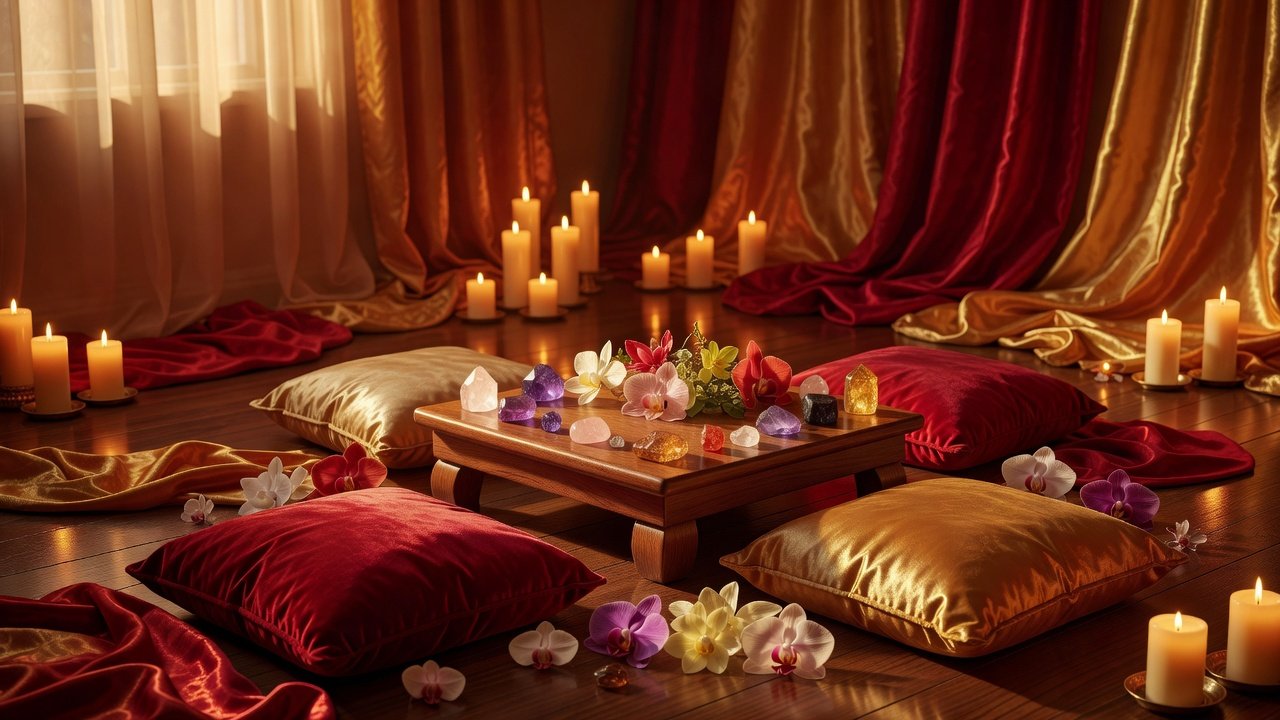
Lighting sets the mood for erotic wellness. Use layered options including dimmable lamps, salt lamps, and candles. Warm amber tones around 2700K create an intimate glow that supports relaxation and arousal. Avoid harsh overhead lights that disrupt the sensual atmosphere. Add sheer curtains or rice-paper screens to diffuse daylight into gentle patterns.
Fabrics play a vital role in tactile comfort. Layer silk, velvet, and organic cotton throws in rich colors like deep burgundy, gold, and forest green. These materials invite skin contact and symbolize abundance within tantric traditions. Place multiple textures within reach so you can experiment during sessions. For instance, a velvet cushion under the knees during seated meditation contrasts beautifully with a cool silk sheet draped across the body later.
Incorporating Sound and Scent
Sound influences the nervous system directly. Include a small Bluetooth speaker for curated playlists of binaural beats, chanting, or nature sounds. Wind chimes or a singing bowl placed near the altar can be struck gently at the beginning and end of each session to mark transitions. Keep volume low so the sound supports rather than overwhelms internal focus.
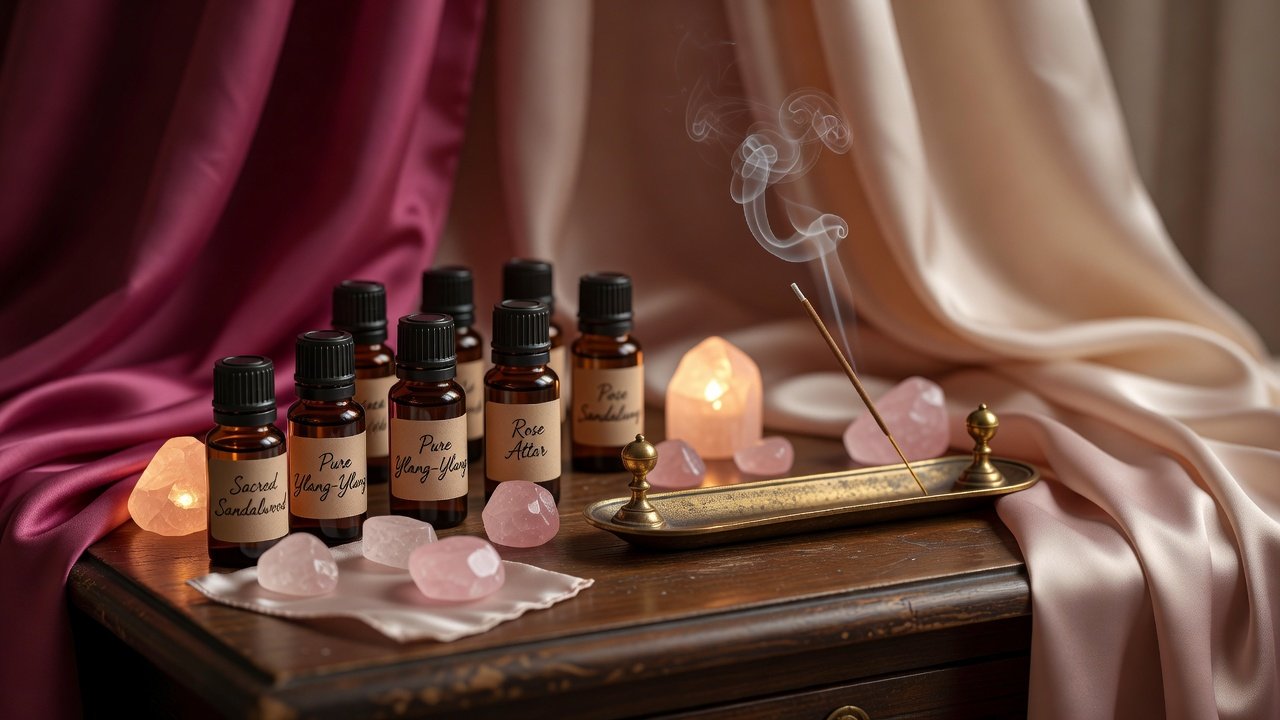
Scent deepens embodiment. Use an essential oil diffuser with sandalwood, jasmine, or ylang-ylang diluted appropriately. Rotate scents seasonally; lighter citrus notes suit morning practices while heavier resins work well for evening sessions. Always test oils on a small skin patch first and ensure the room has adequate ventilation.
Symbolic Items and Altar Setup
An altar anchors the space with meaningful objects. Include crystals such as rose quartz for love energy, small statues representing deities, fresh flowers, and essential oil diffusers. Arrange items intentionally rather than randomly to create visual harmony that mirrors internal balance. Add personal photographs, written affirmations, or small offerings like fruit to make the altar uniquely yours.
Step-by-step altar creation begins with clearing the surface, followed by placing a central focal point like a candleholder. Add supporting elements in symmetrical or circular patterns. Refresh flowers and oils weekly to keep the energy vibrant. Many practitioners also include a small bowl of water to represent emotional flow and a feather to symbolize air and breath.
Breathwork and Mindfulness Integration
Once the physical elements are in place, layer in practices that activate the space. Begin each visit with five minutes of diaphragmatic breathing while seated on a cushion. Follow with slow, conscious movement such as gentle spinal waves or hip circles to awaken pelvic energy. Keep a journal nearby to record sensations or insights after each session, turning the space into a living record of your erotic wellness journey.
Budget-Friendly Setup Examples
Start with items already in your home such as repurposed scarves for draping and existing cushions for seating. Thrift stores often yield quality fabrics and decorative bowls at low cost. Focus on quality over quantity by selecting fewer meaningful pieces that align with your intentions. DIY elements like handmade mandalas or printed affirmations add personal significance without expense. One practitioner created an entire altar using a wooden tray, thrifted brass candleholders, and dried botanicals gathered on walks, proving that intention matters more than budget.
Common Mistakes to Avoid
- Overcrowding the space with too many objects, which creates visual clutter and distracts from mindfulness.
- Ignoring ventilation, leading to stale air during extended sessions.
- Using synthetic scents that cause headaches instead of natural essential oils.
- Neglecting soundproofing or background noise control, breaking the immersive experience.
- Placing the altar in direct line with doors or windows, which can feel energetically exposed.
- Forgetting to clean fabrics and surfaces regularly, allowing dust to accumulate and dull sensory pleasure.
Home Setups Versus Professional Studio Spaces
Home environments offer unmatched privacy and customization, allowing daily integration into routines without travel. You control every detail from scent to temperature. Professional studios provide expert guidance, specialized equipment, and community classes that can accelerate learning. Many practitioners combine both: using home spaces for personal practice and studios for workshops. The choice depends on your comfort level with public settings and desire for expert facilitation. If budget allows, attending a studio session once a month can supply fresh ideas to bring back into your home design.
Practical Step-by-Step Setup Instructions
- Clear and clean the chosen area thoroughly, removing any unrelated items.
- Install dimmable lighting and test all levels at different times of day.
- Layer floor coverings, cushions, and throws for layered comfort and temperature control.
- Position the altar and symbolic items with clear intention, testing sightlines from your main practice spot.
- Add sound elements such as soft chimes or a small speaker for curated playlists.
- Introduce scent gradually and note which aromas enhance versus distract from your focus.
- Test the space during a short meditation to identify any needed adjustments.
- Establish a simple closing ritual, such as extinguishing candles and offering gratitude, to maintain energetic boundaries.
Personalization for Different Needs
Individuals with mobility considerations may prefer floor-level altars and supportive bolsters. Couples often benefit from two distinct seating areas connected by a shared central element. Those living in small apartments can create modular setups using rolling carts that store altar items when the space must serve multiple functions. Revisit these choices every few months as your practice deepens.
FAQ: Safety and Personalization
How do I ensure safety in my sacred space? Always prioritize consent and clear communication if sharing the space. Keep fire safety in mind with candles and use non-toxic materials throughout. Store any sharp or breakable items out of reach during movement practices.
Can the space be personalized for couples? Yes. Incorporate dual seating options and items meaningful to both partners while maintaining individual altars if desired. Discuss preferences openly before finalizing the design.
What if I have limited space? Focus on portable elements like a foldable mat and small altar that can be stored when not in use. Vertical storage solutions such as wall-mounted shelves free up floor area.
How often should I refresh the space? Weekly cleaning and monthly intention resets keep energy clear. Seasonal changes to fabrics or altar objects help the room stay aligned with shifting moods and external cycles.
Conclusion
Designing a tantric sacred space elevates erotic wellness by creating an environment dedicated to presence and pleasure. By thoughtfully selecting lighting, fabrics, sound, scent, and symbols while following the outlined steps, you build a foundation for lasting mindfulness practices in 2026 and beyond. Begin small, refine over time, and allow your space to evolve with your journey. The result is a personal sanctuary that consistently supports deeper connection to self and others.
No comments yet. Be the first!