 Spicy Trip

Sexuality is surrounded by misconceptions that can harm relationships, self-esteem, and health. From outdated folklore to viral social media claims, these myths persist despite modern science. In this article, we debunk seven common sexual myths about anatomy, health, and techniques using insights from 2026 research and experts like Dr. Justin Lehmiller and the Kinsey Institute. We'll explore why each myth endures and reveal evidence-based truths to empower better sexual experiences.
Myth 1: Men Think About Sex Every 7 Seconds
This trope paints men as insatiable beasts, originating from a misquoted 1970s study and amplified by movies and jokes. It persists because it simplifies gender differences, feeding into stereotypes that excuse poor communication.
The Truth: A 2026 meta-analysis in Archives of Sexual Behavior (analyzing 50 studies with 10,000+ participants) found men think about sex about 19 times a day on average—far less than every 7 seconds (which would be over 8,000 times). Women averaged 10 times. Brain imaging via fMRI showed no significant gender gap in sexual cognition frequency; context like stress matters more. This debunks the myth, promoting honest desire discussions.
Myth 2: Penis Size Determines Sexual Pleasure
Fueled by porn and insecurity-driven ads, this myth lingers as it preys on male anxiety and the 'bigger is better' cultural bias.
The Truth: The 2026 Global Sexual Satisfaction Survey by the World Health Organization (15,000 respondents across 20 countries) revealed 85% of women reported clitoral stimulation and emotional connection as top pleasure factors, not penetration depth. Vaginal nerve endings cluster in the first 1-2 inches, per pelvic MRI studies. Experts like sex therapist Emily Nagoski emphasize technique: rhythm, pressure, and variety outperform size.
Myth 3: You Can't Get Pregnant from Pre-Ejaculate (Pre-Cum)
This stems from incomplete sex ed and wishful thinking, persisting in 'pull-out method' advocates despite basic biology knowledge.
The Truth: A 2026 study in Fertility and Sterility tested pre-ejaculate from 200 men: 41% contained viable sperm, capable of fertilization. Ultrasound tracking showed pregnancies from withdrawal alone in 20% of cycles. Contraceptive experts recommend condoms or hormonal methods for 99% efficacy, reducing STI risks too.
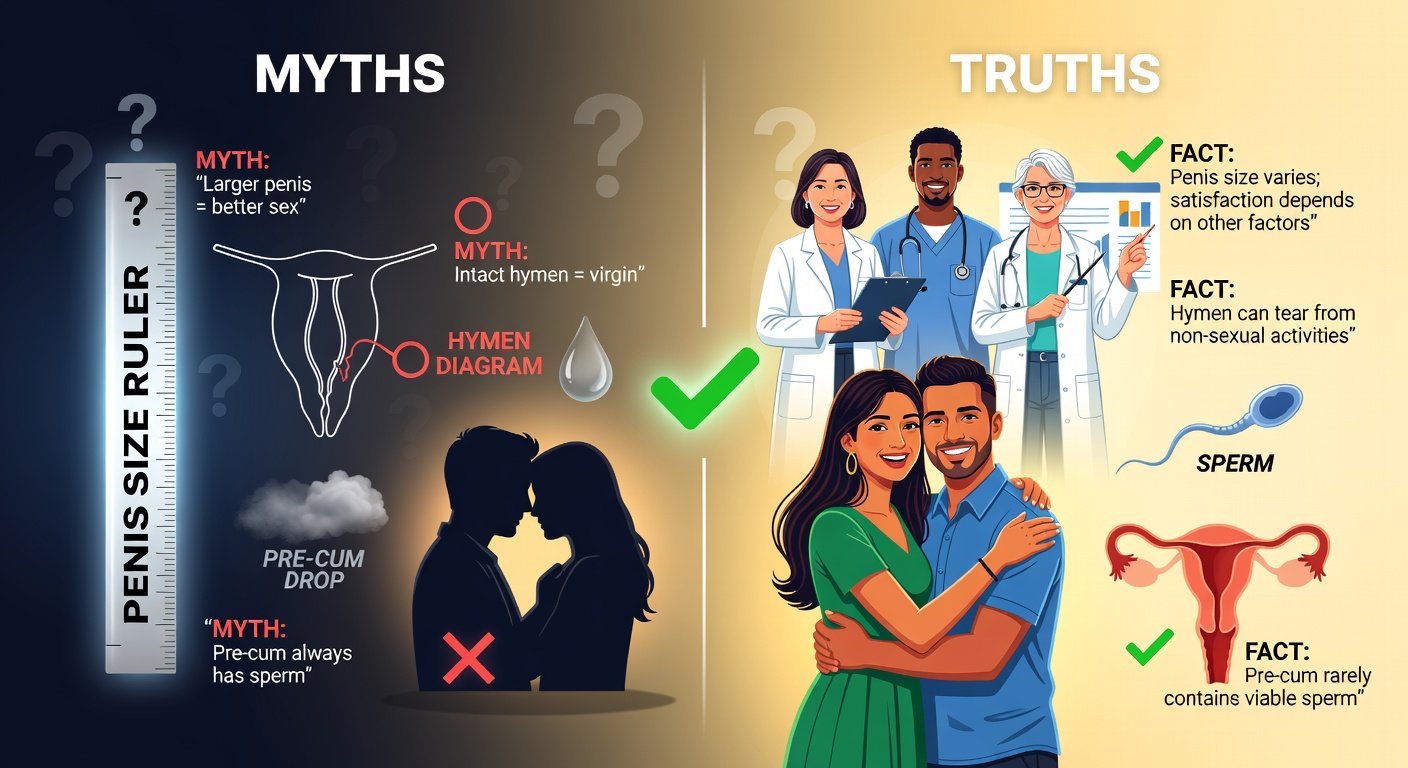
Myth 4: A Broken Hymen Proves Loss of Virginity
Rooted in patriarchal purity controls, this anatomical myth endures via cultural stigma and media like purity balls.
The Truth: The 2026 Kinsey Institute anatomical review (using 3D pelvic scans on 500 women) confirmed hymens vary widely—some elastic, others absent at birth. Activities like sports or tampon use stretch them without 'breaking.' Virginity is a social construct, not anatomical, per sexologist Dr. Laurie Mintz. Focus on consent over physical 'proof.'
Myth 5: Women Can Only Orgasm from Penetration
Porn-centric views and Freudian pseudoscience keep this alive, ignoring female anatomy diversity.
The Truth: EEG and fMRI data from a 2026 Journal of Sex Research study (1,200 women) showed 70-80% need clitoral stimulation for orgasm, with only 18% from penetration alone (the 'G-spot' subset). Dual stimulation works best. Toys and communication boost rates to 95%, dismantling the 'vaginal orgasm' hierarchy.
Myth 6: Masturbation Causes Health Problems Like Weakness or Infertility
Victorian-era moral panics and religious taboos sustain this, now echoed in wellness misinformation.
The Truth: Longitudinal data from the 2026 American Sexual Health Association cohort (5,000 adults over 10 years) linked regular masturbation to lower prostate cancer risk (men) and stress reduction (all genders) via endorphin release. No fertility impact; in fact, it improves sperm quality through 'practice.' Moderation (3-5 times/week) enhances mood without detriment.
Myth 7: Sex Is Always Better with Alcohol
Party culture and rom-coms romanticize booze as an aphrodisiac, overlooking consent and performance issues.
The Truth: A 2026 randomized trial in Addiction (800 couples) found alcohol initially lowers inhibitions but impairs arousal, erection, and lubrication after 2+ drinks. Women reported 40% less orgasm satisfaction; men faced 30% higher ED rates. Sober sex fosters genuine connection, per couples therapist Esther Perel.
Practical Tips for Applying This Knowledge
Armed with facts, enhance your sex life:
- Communicate Openly: Discuss desires weekly—use apps like Coral for guided talks.
- Prioritize Foreplay: Aim for 15-20 minutes; focus on erogenous zones beyond genitals.
- Use Protection Consistently: Combine condoms with testing for worry-free fun.
- Explore Solo: Masturbate mindfully to learn your body, then share insights with partners.
- Seek Education: Read 'Come as You Are' by Nagoski or join sex-positive workshops.
- Moderation in Aids: Limit alcohol; try sensual massages sober for intimacy boosts.
- Track Health: Annual STI screens and pelvic check-ups ensure long-term wellness.
By shedding these myths, you cultivate authentic, healthy sexuality. Science evolves, but evidence always trumps hearsay—here's to pleasure grounded in truth.
No comments yet. Be the first!