 Spicy Trip

What Are Erogenous Zones?
Erogenous zones are areas of the body that are particularly sensitive to touch and can produce sexual arousal or pleasure when stimulated. They vary from person to person, but certain spots are commonly recognized across genders. Understanding these zones is crucial for sexual health education, as it promotes better communication, consent, and mutual satisfaction in intimate encounters.
This beginner's guide breaks down the anatomy of key erogenous zones, offers simple and safe techniques to stimulate them, and debunks prevalent myths. Whether you're exploring solo or with a partner, prioritizing consent and comfort is paramount.
Key Erogenous Zones: Anatomy and Stimulation Techniques
Let's dive into the most responsive areas, supported by basic anatomical insights. Always start slow, use lubrication where needed, and communicate openly.
1. Lips and Mouth
The lips are packed with nerve endings, particularly the Meissner's corpuscles, which detect light touch. Kissing activates these, releasing oxytocin for bonding.
- Technique: Soft nibbling, sucking, or tracing with the tongue. Vary pressure for teasing buildup.
- Safety Tip: Fresh breath and consent checks enhance the experience.
2. Neck and Ears
The neck's skin is thin with high concentrations of free nerve endings. Ears have sensitive lobes and the area behind them, linked to the vagus nerve for arousal signals.
- Technique: Gentle kisses, breath blowing, or light ear nibbling. Use fingertips for nape stroking.
- Safety Tip: Avoid if ticklish; gauge reactions.
3. Nipples and Chest
Nipples contain smooth muscle fibers that contract like those in genitals, connected to the same brain regions for pleasure. Areolae are also highly innervated.
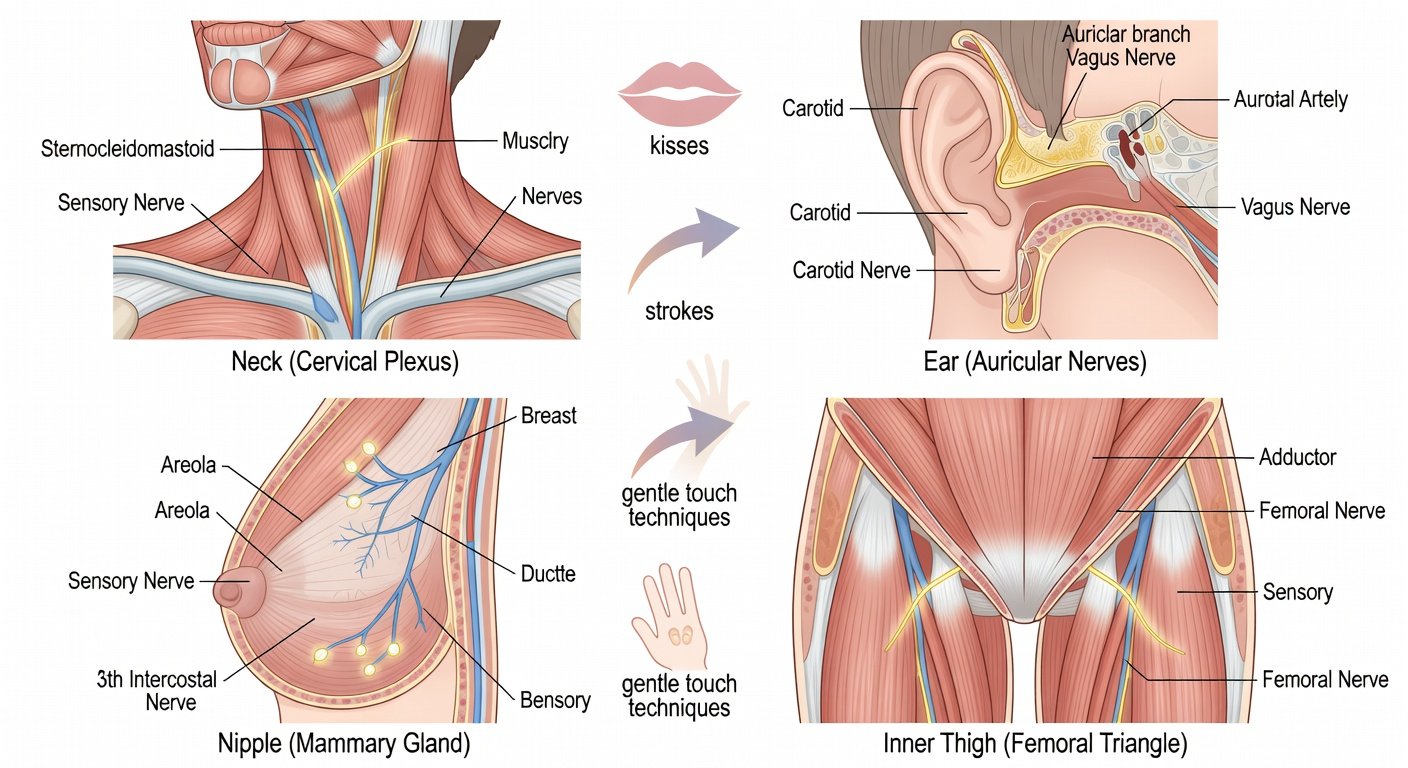
- Technique: Circular motions with tongue or fingers, light pinching, or ice for contrast. Build gradually.
- Safety Tip: Sensitivity varies; some prefer no direct contact.
4. Inner Thighs and Lower Abdomen
These areas have sparse hair follicles amplifying touch via Merkel cells. Proximity to genitals heightens anticipation.
- Technique: Feather-light strokes or kisses inching closer without direct genital contact.
- Safety Tip: Great for edging to intensify orgasms.
5. Genitals (Clitoris, Penis, Perineum, Anus)
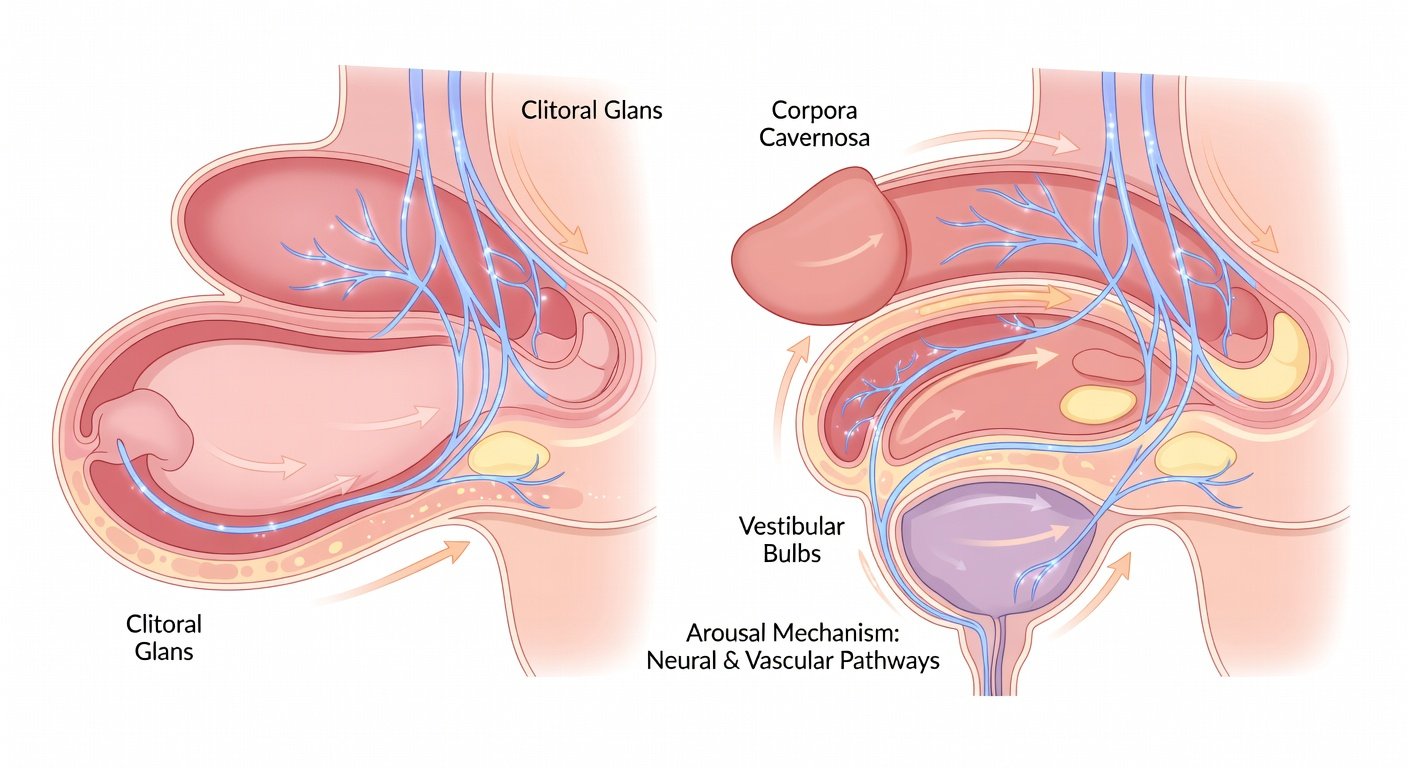
The clitoris has over 8,000 nerve endings, more than the penile glans. The perineum bridges genitals and anus, rich in pudendal nerves. Anal area has sensitive external sphincters.
- Technique: Clitoral hood circling, penile shaft gliding, perineum pressing during penetration, or rimming with lube.
- Safety Tip: Use barriers for anal play; hygiene first. For more on genital health, visit Planned Parenthood.
Debunking Common Myths About Erogenous Zones
Misinformation can hinder pleasure. Here's the truth:
- Myth: Only genitals matter. Fact: Whole-body erogenous zones create fuller arousal. Studies show non-genital stimulation boosts orgasm rates.
- Myth: Men have fewer erogenous zones than women. Fact: Both genders have similar distributions; societal norms suppress male exploration.
- Myth: Erogenous zones are fixed. Fact: They evolve with mood, experience, and health. Pregnancy or aging shifts sensitivity.
- Myth: Rough stimulation is always better. Fact: Gentle touch often elicits stronger responses due to nerve adaptation.
For evidence-based sexual health info, check the World Health Organization's sexual health page.
Safe Practices for Maximum Pleasure
Enhance intimacy with these tips:
- Communicate: Use 'yes/no/more' signals.
- Prep: Trim nails, warm hands, use quality lube.
- Experiment: Map zones with blindfolds for discovery.
- Aftercare: Cuddling reinforces bonds.
Incorporate mindfulness; focus on sensations to deepen connections. If issues like numbness arise, consult a doctor—could signal nerve or hormonal concerns.
Why Understanding Erogenous Zones Matters
Knowledge empowers safer, more fulfilling sex. It fosters body positivity, reduces performance anxiety, and strengthens relationships. Share this guide to spark open dialogues.
For further reading on human sexuality research, explore the Kinsey Institute.
Remember, pleasure is personal—tailor these insights to your desires.
No comments yet. Be the first!