 Spicy Trip

Introduction to BDSM Emergency Response
BDSM activities emphasize consent, communication, and safety, yet even experienced practitioners can encounter unexpected complications during scenes. This comprehensive guide details emergency protocols tailored for BDSM safety, covering recognition of distress signals, immediate interventions, and seamless integration of aftercare. Whether you are a beginner or veteran, understanding these strategies reduces risks and builds trust within kink communities. Preparation prevents most issues, but swift, informed responses handle those that arise.
Recognizing Signs of Distress During Scenes
Continuous monitoring forms the foundation of safe play. Physical distress often manifests through altered breathing patterns, such as rapid shallow breaths or sudden gasping. Skin color changes like paleness, flushing, or bluish tints around lips signal circulation or oxygenation problems. Limb temperature drops or swelling indicate restraint-related issues. Emotional distress appears as sudden silence, trembling, or disorientation beyond typical subspace effects. Non-verbal cues, including safe signal gestures, must be respected instantly. Establishing clear safe words and signals before any scene ensures everyone can communicate boundaries effectively.
Preparing Your Emergency Kit
A well-stocked kit is essential for in-scene responses. Include safety shears for quick restraint removal, antiseptic wipes, bandages, cold packs, antihistamines, a flashlight, and emergency contact lists. Add a pulse oximeter for monitoring oxygen levels and a basic first-aid manual. Store items accessibly yet discreetly. Review and restock the kit monthly to maintain readiness. Many practitioners also keep a written scene log noting allergies and health conditions.
Immediate Response Steps
Upon detecting distress, halt all activity immediately. Release restraints using safety shears if necessary, starting from the extremities and moving inward to avoid further injury. Assess the airway, breathing, and circulation following ABC protocols. Position the person comfortably, preferably on their side if unconscious but breathing. Offer reassurance in a calm voice while checking responsiveness. If symptoms like severe pain, vomiting, or loss of consciousness occur, call emergency services without delay. Document the incident afterward for future prevention.
Common Scenarios and Detailed Protocols
Circulation Issues with Restraints
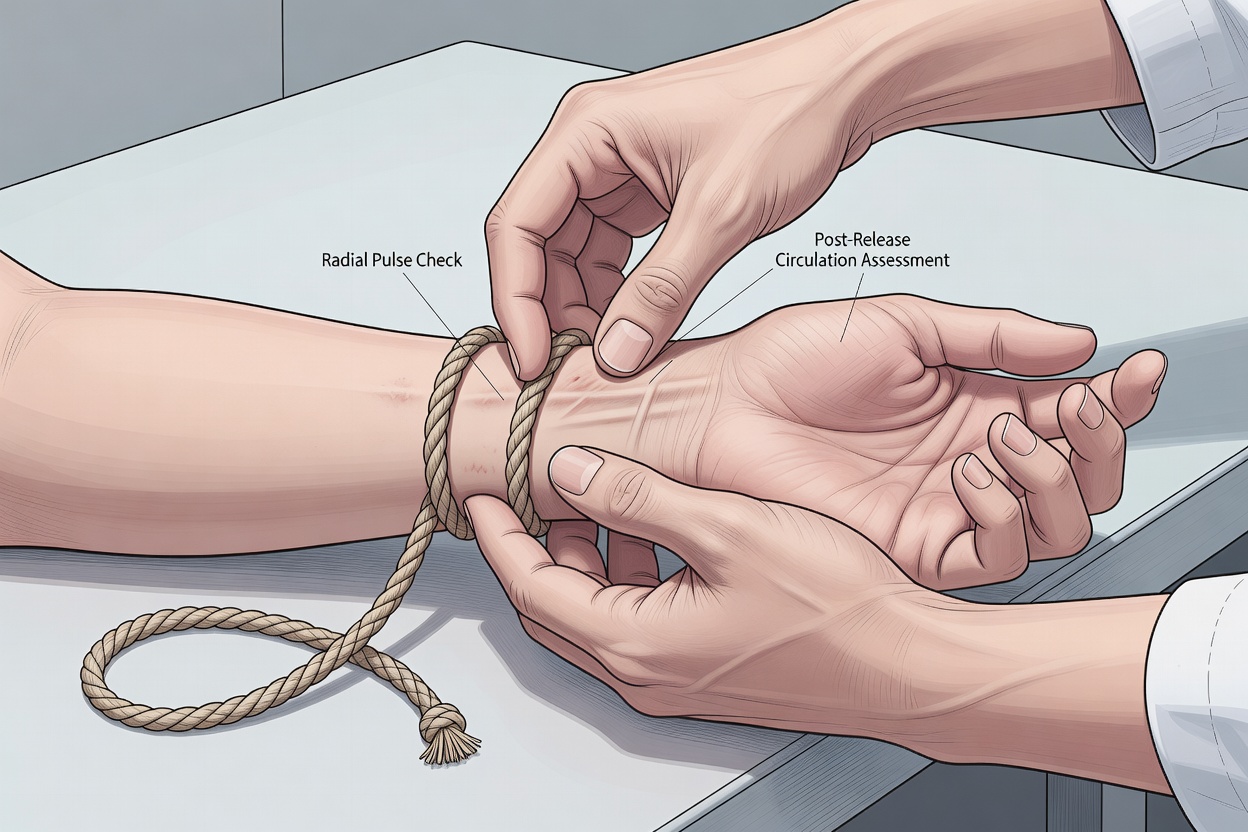
Restraints such as rope, cuffs, or chains can compress nerves or vessels. Early signs include numbness, tingling, or cool skin distal to the bond. Protocol requires checking circulation every 10 to 15 minutes by pressing on a fingernail or toe and watching for color return within two seconds. If compromised, loosen or remove the restraint gradually. Elevate the limb and massage gently to restore flow. Example: A participant in suspension bondage reported tingling after 20 minutes; immediate release and elevation prevented nerve damage.
Allergic Reactions to Tools or Materials
Materials like latex gloves, silicone toys, or flavored lubricants trigger reactions ranging from localized hives to full anaphylaxis. Symptoms include itching, swelling, wheezing, or dizziness. Always perform patch tests 24 hours prior on inner arm skin. Keep epinephrine auto-injectors available if known allergies exist. Protocol: Remove the allergen source, administer antihistamine, monitor breathing, and seek medical help if swelling affects the throat. A real case involved a latex allergy flare from new cuffs, resolved by switching to vinyl alternatives and quick medication.
Psychological Emergencies
Intense scenes may trigger panic attacks, subspace crashes, or resurfaced trauma. Signs include hyperventilation, sobbing, or dissociation. Create a quiet, safe space immediately. Use grounding techniques such as naming objects in the room or deep breathing exercises. Provide water and a warm blanket. Never leave the person alone until stabilized. Integrate aftercare discussions to process emotions.
Additional Scenarios: Fainting and Rope Burns
Fainting often stems from dehydration, low blood sugar, or vasovagal responses. Lower the person to the floor, elevate legs, and loosen clothing. Offer glucose tabs once alert. Rope burns require cooling with water, antibiotic ointment, and monitoring for infection. Always have burn gel on hand.
Professional Medical Intervention Versus In-Scene Handling
Minor issues like brief dizziness respond well to in-scene care with prepared kits. However, severe symptoms such as difficulty breathing, uncontrolled bleeding, or unresponsiveness demand professional help. Use a decision framework: if vital signs remain stable after five minutes of basic aid, continue monitoring; otherwise, dial emergency services. Hospitals offer advanced diagnostics unavailable in private settings. Resources like the American Red Cross provide first-aid training tailored for community groups.
Real-World Case Studies
Case one involved rope suspension where circulation failed unnoticed for several minutes. Quick release, limb elevation, and 30 minutes of monitoring averted permanent issues, highlighting the need for frequent checks. Case two featured an allergic reaction to a new cleaning solution on impact toys. The top recognized hives early, removed the item, and administered medication, leading to full recovery within an hour. Case three described a psychological drop after an intense impact scene; extended aftercare and follow-up check-ins helped the bottom process feelings and resume play safely weeks later. These examples underscore proactive communication.
Aftercare Integration Post-Incident
Aftercare extends beyond immediate physical needs to emotional reconnection. Begin with hydration, nutrition, and rest. Follow with verbal debriefing about what occurred and feelings involved. Adjust future protocols based on insights gained. Schedule follow-up conversations 24 to 48 hours later. Community support networks often share aftercare templates for consistency.
Mistakes to Avoid
- Ignoring early warning signs in favor of continuing the scene.
- Using improper tools like regular scissors instead of safety shears.
- Skipping patch tests on new products.
- Failing to discuss medical histories beforehand.
- Neglecting emotional aftercare after physical resolution.
FAQ: Beginner Concerns in Kink Basics
- What is the first step in any emergency? Immediately stop the scene and assess vital signs using ABC methods.
- How do I prepare an emergency kit? Include shears, bandages, antihistamines, and contact numbers for local emergency services.
- When should I call 911? For breathing difficulties, severe swelling, unconsciousness, or symptoms lasting beyond basic interventions.
- Can I handle most issues without professionals? Minor concerns yes, but any doubt warrants professional evaluation to prevent complications.
- How often should I review safety protocols? Quarterly refreshers with partners keep skills sharp and incorporate new best practices.
Conclusion
Implementing robust BDSM emergency protocols protects participants and strengthens scene dynamics. Education, preparation, and clear communication form the core of responsible practice. For authoritative health guidance, consult Mayo Clinic and World Health Organization resources on first aid and allergy management. Continuous learning ensures safer, more enjoyable experiences for everyone involved.


No comments yet. Be the first!