 Spicy Trip

Introduction: Why Consent Check-Ins Matter in 2026
In today's evolving relationship landscape, maintaining open communication about intimacy is essential for long-term couples. Consent check-ins provide a structured yet flexible way to ensure enthusiastic consent remains central to your sex life. This guide walks you through seven actionable steps to integrate these conversations seamlessly, fostering deeper trust and satisfaction.
Research from leading health organizations highlights how regular dialogue reduces misunderstandings and enhances mutual pleasure. By adopting these practices, couples report stronger emotional bonds and more fulfilling intimate experiences.
Step 1: Define What Consent Check-Ins Mean for You
Start by clarifying the purpose of your check-ins as a couple. Discuss whether they will focus on recent encounters, upcoming plans, or general feelings about intimacy. This foundation prevents confusion and sets a positive tone.
Sample dialogue: "Let's define our check-ins as a safe space to share what felt good and any new boundaries we'd like to explore."
Step 2: Schedule Regular Check-Ins
Consistency builds habit. Choose daily five-minute chats or weekly deeper sessions that suit your lifestyle. Block time on shared calendars to prioritize them without pressure.
Tip: Evening wind-downs or weekend mornings often work well for relaxed discussions.
Step 3: Use Open-Ended Questions
Move beyond yes/no queries to encourage honest sharing. Effective questions include: "What made you feel most connected lately?" or "Is there anything new you'd like to try or avoid?"
This approach uncovers nuanced feelings and keeps conversations engaging.
Step 4: Practice Active Listening Techniques
Listen without interrupting, reflect back what you hear, and validate emotions. Phrases like "It sounds like that position made you feel vulnerable—thank you for sharing" demonstrate care.
Active listening transforms check-ins from routine talks into meaningful connection builders.
Step 5: Address Any Hesitations Compassionately
If one partner seems reluctant, explore gently without judgment. Common hesitations stem from past experiences or fear of conflict. Reassure each other that all feelings are welcome.
Example: "I notice you paused there—can you tell me more about what's on your mind?"
Step 6: Agree on Follow-Up Actions
End each check-in with clear next steps, such as trying a new boundary or revisiting a topic later. This turns insights into real changes that enhance your intimate life.
Step 7: Track Progress and Celebrate Growth
Use a simple journal or app to note patterns over time. Review monthly to celebrate improvements and adjust as needed.
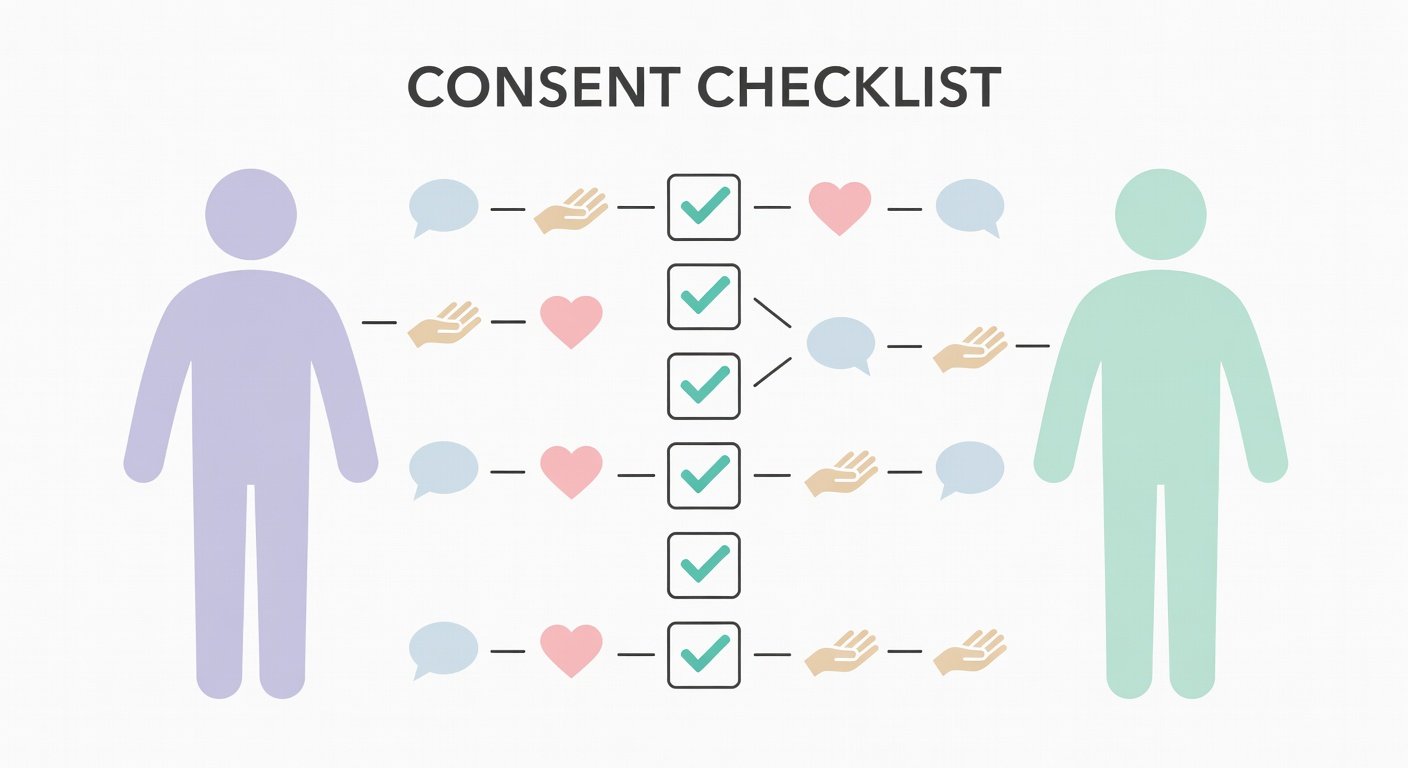
Key Benefits of Consistent Consent Check-Ins
Couples who implement these steps often experience heightened trust, reduced anxiety around intimacy, and greater sexual satisfaction. Real testimonials from long-term partners highlight how check-ins revived spark in relationships that felt routine.
- Stronger emotional intimacy
- Clearer boundaries leading to enthusiastic consent
- Improved conflict resolution skills
Common Pitfalls to Avoid
Steer clear of turning check-ins into criticism sessions, skipping them during busy periods, or assuming consent from silence. Instead, approach with curiosity and kindness.
Frequently Asked Questions
How do we adapt check-ins for different relationship stages?
Newer couples may start with shorter, more frequent sessions, while established pairs can deepen topics around evolving desires.
What if one partner feels awkward at first?
Normalize the discomfort and start with low-stakes topics before progressing to intimate details.
Conclusion
Implementing these seven steps transforms consent from a one-time agreement into an ongoing, enriching dialogue. For additional resources on sexual health communication, explore guidance from Planned Parenthood and the World Health Organization. Start your first check-in today and watch your connection flourish.


No comments yet. Be the first!