 Spicy Trip

Introduction to Cultural Influences on Consent
Consent in intimate relationships is not a universal script. Cultural backgrounds deeply shape how people express, interpret, and negotiate enthusiastic consent and personal boundaries. In 2026, with increasing intercultural partnerships, understanding these differences is essential for healthy, respectful connections. This article explores high-context versus low-context communication styles, real-world couple examples, adaptable scripts, and practical steps to align consent practices across cultures.
Enthusiastic consent means ongoing, freely given agreement that can be withdrawn at any time. Yet what feels clear in one culture may appear indirect or even absent in another. Readers seeking actionable advice will find concrete tools here to navigate these nuances effectively. Many couples in mixed-culture relationships report initial misunderstandings that stem from unspoken assumptions rather than malice, making proactive education vital for long-term satisfaction and trust.
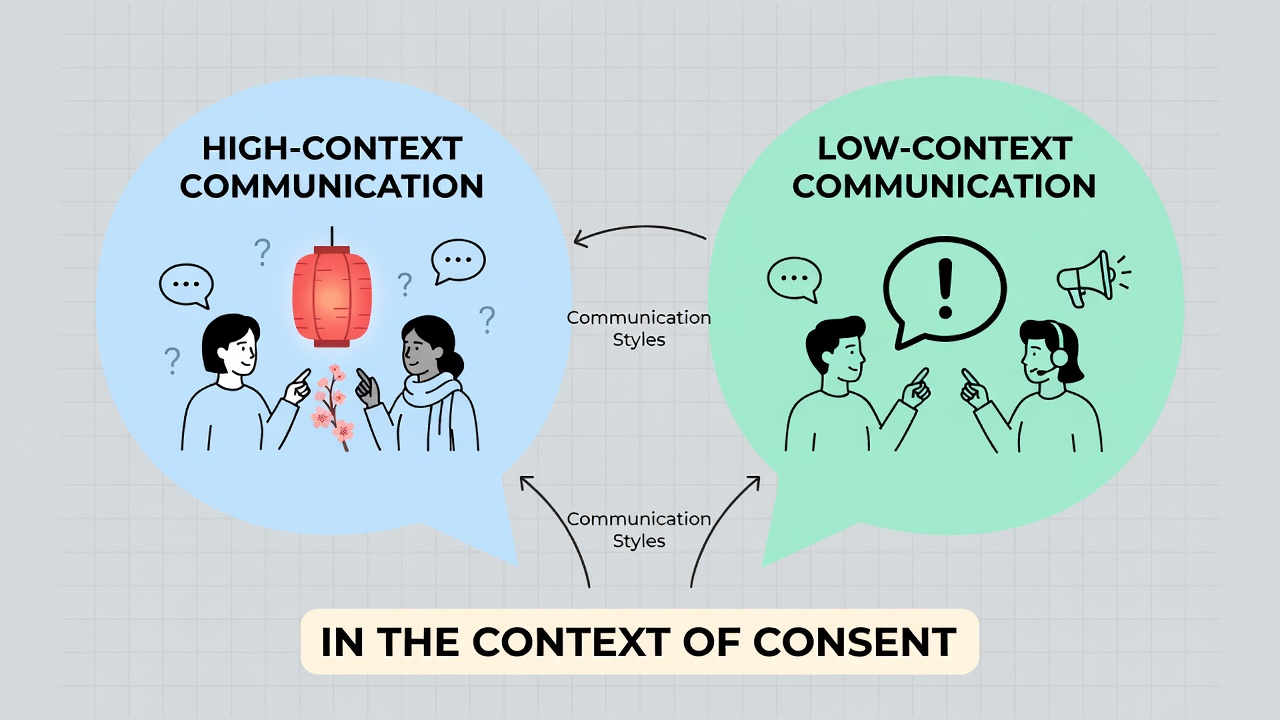
High-Context vs Low-Context Communication Styles
Communication styles vary significantly across cultures. High-context cultures, such as those in East Asia, the Middle East, and Latin America, rely heavily on nonverbal cues, shared history, and implicit understanding. In these settings, direct verbal requests about sexual boundaries may feel uncomfortable or unnecessary because meaning is conveyed through tone, body language, and relational context. For example, a slight hesitation or change in eye contact might signal discomfort more powerfully than words in Japanese or Saudi Arabian partnerships.
Low-context cultures, including many Western European and North American societies, prioritize explicit verbal communication. Partners expect clear, spoken affirmations like “yes” or “no” at every stage of intimacy. When a high-context partner meets a low-context partner, misalignments can occur: one may interpret silence as agreement while the other waits for explicit confirmation. These clashes often surface during early dating stages or after major life transitions like moving in together.
Research from global health organizations highlights that these differences affect how consent education is received. For instance, World Health Organization guidelines emphasize culturally sensitive approaches to sexual health communication. Couples benefit from mapping their default styles early to prevent unintended boundary violations.
Real Couple Examples from Mixed-Culture Partnerships
Consider Maria from Mexico and James from Canada. Maria grew up in a high-context environment where affection and limits were often signaled through gestures rather than words. James, accustomed to direct conversations, initially felt uncertain when Maria responded to boundary discussions with subtle shifts in posture. Through guided exercises, they learned to blend verbal check-ins with acknowledgment of nonverbal signals, creating a hybrid style that respects both backgrounds.
Another example involves Aisha from Nigeria and Liam from Ireland. Aisha’s cultural norms discouraged open talk about sexuality within families, while Liam’s upbringing encouraged frank discussions. They established weekly “relationship check-ins” using neutral language to discuss desires and limits, gradually building comfort with explicit consent language. Over six months they reported stronger emotional intimacy and fewer miscommunications.
A third couple, Priya from India and David from Germany, faced challenges around family involvement. Priya’s background valued collective decision-making, while David preferred private negotiations. They created a private journal for consent notes that each could reference independently, then discussed entries together in a low-stakes format. This approach honored both individual and relational priorities.
Scripts for Initiating Boundary Conversations
Effective scripts help couples start difficult talks without triggering cultural discomfort. Here are adaptable examples that can be modified based on relationship length and comfort level:
- Low-context starter: “I’d like to talk about what feels good for both of us tonight. Can we share our boundaries openly before we begin?”
- High-context bridge: “I notice we communicate care differently sometimes. Let’s explore how we can both feel respected and comfortable during intimate moments.”
- Hybrid approach: “In my family we often show agreement through actions. How do you prefer to express yes or pause during intimacy so I understand clearly?”
- Follow-up check-in: “Last time we tried something new it felt great, but I want to confirm what you would like to repeat or adjust this week.”
Practice these scripts in low-pressure settings first, such as during a walk or over coffee. Revisit them regularly, as consent is an ongoing process rather than a one-time discussion. Recording personal reflections after each conversation can help track growth and identify recurring themes.
Comparing Common Cultural Assumptions
Many cultures assume that long-term partners inherently know each other’s desires, reducing the need for repeated consent conversations. Others prioritize individual autonomy and expect explicit renegotiation with every encounter. Assumptions about gender roles also differ: some societies expect men to initiate and women to respond subtly, while egalitarian cultures encourage mutual initiation and equal responsibility for checking in.
Recognizing these assumptions prevents projection. Partners benefit from openly mapping their cultural “consent maps” together, noting where overlap exists and where gaps require deliberate bridging. This exercise often reveals surprising similarities beneath surface differences and strengthens overall relationship resilience.
Steps to Adapt Consent Education Across Cultures
- Learn each other’s cultural frameworks through respectful curiosity rather than judgment. Schedule dedicated conversations where each partner shares stories from their upbringing without interruption.
- Combine verbal affirmations with attention to nonverbal cues. Agree on a shared signal system, such as a gentle squeeze or specific phrase, that works across both styles.
- Use visual aids or written notes if spoken directness feels too abrupt. Many couples keep a private digital document listing preferences that both can edit over time.
- Seek professional guidance from culturally competent therapists when persistent misunderstandings arise. Look for practitioners experienced in intercultural relationships.
- Reassess communication patterns seasonally, especially after major life changes like relocation, career shifts, or family events.
Resources such as CDC sexual health materials provide adaptable frameworks for diverse populations. Integrating these steps consistently leads to deeper trust and fewer conflicts.
Common Mistakes to Avoid in Cross-Cultural Consent
One frequent error is assuming silence equals agreement. Always clarify when cues are ambiguous. Another mistake involves dismissing a partner’s need for explicit language as overly clinical; instead, treat it as a valid cultural preference. Avoid comparing your current relationship to previous ones from the same culture, as individual variation always exists. Finally, never pressure a partner to adopt your communication style completely—compromise is the goal.
Frequently Asked Questions
How do we handle differing comfort levels with direct language?
Start with indirect questions and gradually introduce more explicit terms. Agree on a shared vocabulary that feels safe for both partners and review it monthly.
What if family expectations conflict with personal consent needs?
Prioritize the couple’s mutual agreement while acknowledging external pressures. Private boundary agreements can coexist with respectful navigation of family dynamics.
Are there 2026 trends in intercultural consent education?
Digital tools and multicultural workshops are increasingly popular, offering scenario-based learning that respects multiple cultural lenses. Many couples now use secure apps for ongoing consent logging.
How can we maintain consent practices during stressful periods?
Shorten conversations to quick check-ins and rely more on established signals. Revisit full discussions once stress levels decrease to ensure nothing has changed.
Conclusion
Cultural differences in consent do not have to create barriers. By understanding communication styles, practicing adaptable scripts, and committing to ongoing dialogue, couples can build relationships grounded in mutual respect and enthusiastic agreement. In 2026, the most successful mixed-culture partnerships treat cultural learning as an integral part of intimacy itself, leading to richer emotional and physical connections over time.


No comments yet. Be the first!