 Spicy Trip
Fertility Awareness Basics: Anatomy, Myths & Health 2026
Understanding fertility awareness forms a core component of effective sex education and personal sexual health management. This comprehensive guide delves into reproductive anatomy fundamentals, systematically debunks widespread myths surrounding ovulation and conception, and equips beginners with actionable strategies for cycle tracking. It explores hormone dynamics, integrates safe sex approaches aligned with fertility windows, and provides detailed examples for mapping individual cycles. Additional coverage includes common pitfalls, tool comparisons, and an FAQ addressing typical beginner questions to foster informed wellness choices throughout 2026.
Reproductive Anatomy Essentials
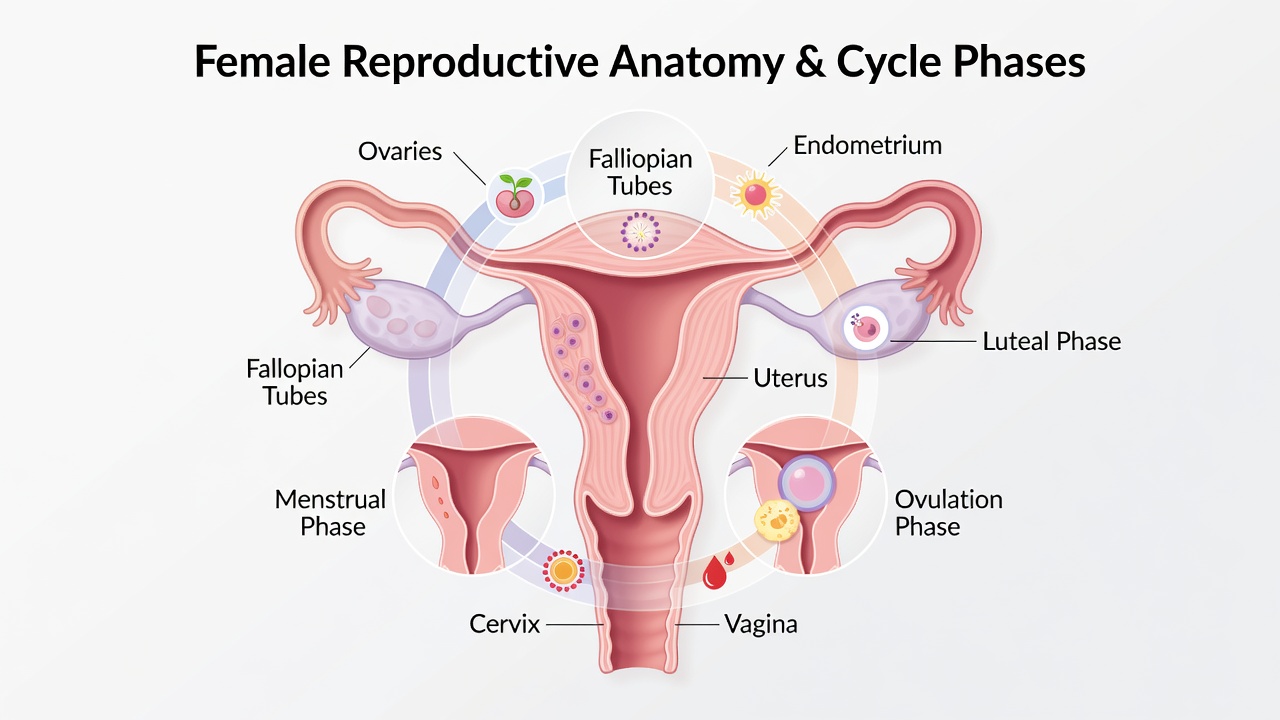
Fertility awareness starts with precise knowledge of the female reproductive system. Key internal structures include the ovaries, which house and release eggs during ovulation; the fallopian tubes, where fertilization typically occurs; the uterus, which prepares a lining for potential pregnancy; and the cervix, whose mucus production changes noticeably throughout the cycle. External anatomy encompasses the vulva and vagina, which also contribute to overall sexual health observation. The average menstrual cycle lasts between 21 and 35 days, though variations are normal. Hormonal signals orchestrate these phases, making daily awareness of bodily changes essential. Understanding these elements allows individuals to interpret fertility signals accurately rather than relying on assumptions. Educational materials stress that both partners benefit from basic anatomical literacy to support mutual decision-making around contraception and family planning.
Debunking Common Myths About Ovulation and Conception
Several persistent myths distort public understanding of fertility. The notion that ovulation always occurs precisely on cycle day 14 is incorrect; actual timing depends on cycle length and can shift due to stress, illness, or lifestyle factors. Another misconception holds that sperm only survive a few hours, when in fact they can remain viable for up to five days inside fertile cervical mucus. Many also believe that conception is impossible outside a single 24-hour ovulation window, overlooking the extended fertile period created by sperm longevity and egg viability of 12 to 24 hours. Resources from WHO highlight how these inaccuracies lead to unintended pregnancies or unnecessary anxiety. Dispelling them promotes evidence-based sexual health practices and reduces stigma around open discussions of reproductive biology.
Hormone Influences on the Menstrual Cycle
The menstrual cycle divides into distinct phases governed by four primary hormones. In the follicular phase, rising estrogen thickens the uterine lining and produces fertile cervical mucus. A surge in luteinizing hormone triggers ovulation, releasing an egg from the ovary. During the luteal phase, progesterone maintains the uterine lining and elevates basal body temperature by 0.4 to 1.0 degrees Fahrenheit. These shifts create observable patterns that tracking methods exploit. External factors such as sleep disruption or intense exercise can suppress hormone levels and alter cycle regularity. Recognizing these influences helps users interpret chart data more reliably and seek medical advice when anomalies persist beyond three cycles.
Practical Cycle Charting Methods
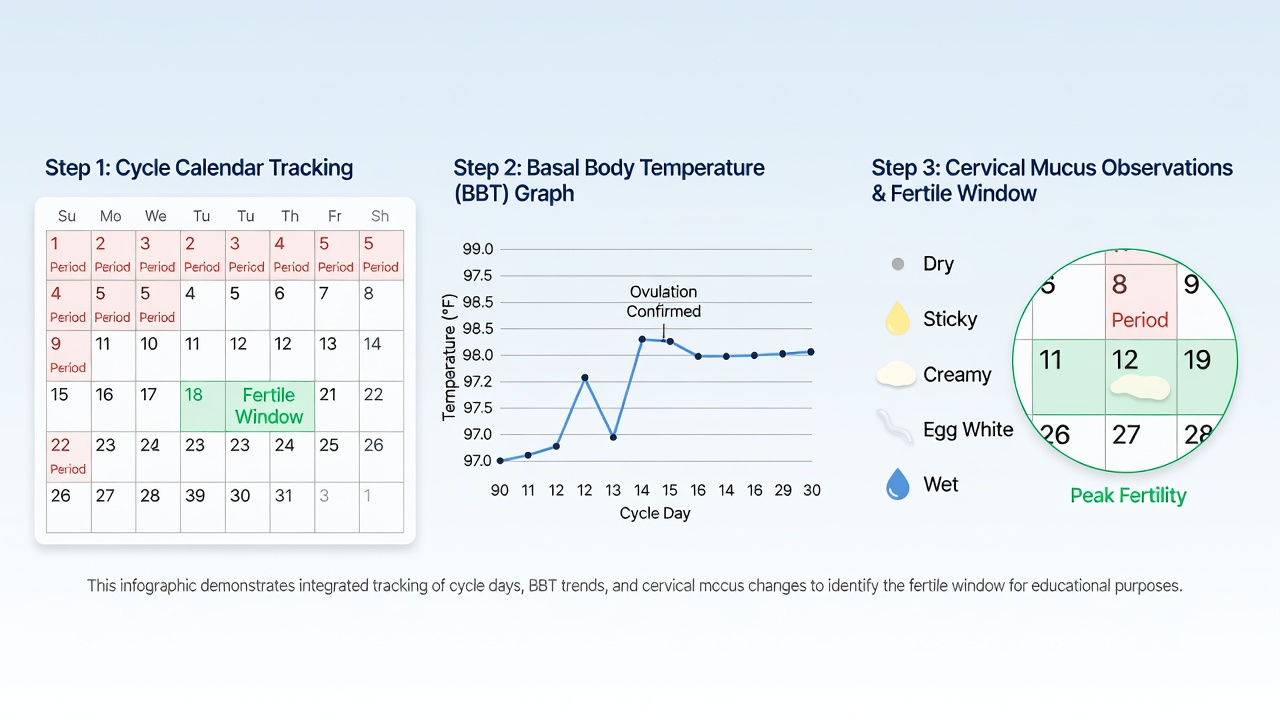
Symptothermal charting combines multiple indicators for higher accuracy. Users record basal body temperature daily upon waking, observe cervical mucus consistency and color, and optionally note cervical position and firmness. Alternative approaches include the cervical mucus method alone or calendar calculations based on past cycle lengths. Beginners should track for at least three full cycles before relying on patterns for decision-making. A sample scenario involves a 28-day cycle where mucus becomes clear and stretchy around days 10 through 15, followed by a sustained temperature rise on day 16 confirming ovulation. Consistency matters more than perfection; missing one day does not invalidate the overall chart if other signs align.
Step-by-Step Example for Mapping Your Cycle
- Mark day one as the first day of menstrual bleeding and log flow intensity.
- Take basal body temperature each morning at the same time using a precise thermometer.
- Check and describe cervical mucus at multiple points during the day, noting changes from dry to creamy to egg-white texture.
- Record any additional symptoms such as breast tenderness or mood shifts.
- Identify the temperature shift that signals ovulation has occurred.
- Map the fertile window as the five days preceding ovulation plus ovulation day itself.
- Review the completed chart at cycle end to refine predictions for the next month.
Repeating this process builds personal data that becomes increasingly predictive over time.
Comparison of Tracking Tools
Selecting the right tool depends on lifestyle and budget. Paper charts offer simplicity and complete data ownership without subscriptions. Mobile applications provide automated graphing and reminders but may involve privacy considerations. Wearable sensors deliver continuous temperature readings yet require consistent use and higher initial investment. A table comparison clarifies these trade-offs for informed selection.
| Tool Type | Advantages | Limitations |
|---|---|---|
| Paper Charts | Simple, no tech required, full data control | Manual calculations, easy to lose |
| Mobile Apps | Automated reminders, visual graphs, community tips | Subscription costs may apply, data privacy concerns |
| Wearable Devices | Continuous temperature monitoring, integration with other health metrics | Higher expense, requires consistent wear |
Safe Sex Techniques Tied to Fertility Windows
During identified fertile windows, consistent use of barrier methods such as condoms provides protection against both pregnancy and sexually transmitted infections. Outside these windows, fertility awareness-based methods can support natural family planning when combined with backup contraception for greater reliability. Communication between partners about cycle status strengthens shared responsibility. Official guidance from CDC recommends consulting healthcare professionals to tailor approaches to individual health profiles and relationship dynamics.
Common Mistakes to Avoid
New users often skip temperature readings on weekends or misinterpret mucus after intercourse. Relying on a single indicator instead of cross-checking multiple signs reduces accuracy. Ignoring external influences like travel or medication changes can lead to misidentified ovulation. Another frequent error involves assuming all cycles behave identically without reviewing historical data. Avoiding these pitfalls through disciplined recording and periodic chart review improves method effectiveness substantially.
FAQ Section for Beginners
How accurate is fertility awareness for avoiding pregnancy?
Perfect use can achieve 95 to 99 percent effectiveness according to method type, though typical use rates are lower due to inconsistent application. Combining multiple signs and maintaining detailed records maximizes reliability.
Can irregular cycles be tracked effectively?
Irregular cycles require extended observation periods and often benefit from medical evaluation to identify underlying causes such as thyroid issues or polycystic ovary syndrome.
Does age impact fertility awareness success?
Fertility declines gradually after age 35, making professional consultation alongside self-tracking advisable for those planning pregnancies or using awareness methods.
What role does stress play in cycle tracking?
High stress can delay ovulation and alter mucus patterns, so noting emotional factors alongside physical data helps contextualize variations.
Are there apps recommended for beginners?
Many users start with free or low-cost options that emphasize education and data export, then transition to more advanced platforms as familiarity grows.
Conclusion
Fertility awareness empowers individuals through detailed understanding of anatomy, hormone patterns, and evidence-based charting techniques. By addressing myths directly and incorporating practical examples, this approach supports safer sexual health decisions and overall wellness. Consistent practice combined with professional guidance ensures users navigate fertility windows confidently in 2026 and beyond.


No comments yet. Be the first!