 Spicy Trip

Introduction to BDSM Scene Negotiation
Scene negotiation forms the foundation of safe BDSM practice, allowing partners to align on desires, boundaries, and safety measures before any physical activity begins. For kink beginners, this proactive communication prevents misunderstandings and builds trust, ensuring all parties feel respected and secure. Effective negotiation transforms potential risks into structured, enjoyable experiences that prioritize consent at every stage. Many newcomers overlook this phase, jumping straight into play, which can lead to discomfort or harm. By investing time upfront, beginners create a shared language around pleasure and limits that enhances intimacy and reduces anxiety during scenes.
Why Negotiation Is Essential for BDSM Safety
Without clear discussion, even experienced players can encounter unexpected issues. Negotiation establishes explicit consent, identifies potential triggers, and sets expectations. It shifts focus from assumptions to mutual understanding, reducing the likelihood of harm during play. Research from sexual health organizations highlights how structured conversations around boundaries correlate with higher satisfaction and lower incidence of negative experiences. For beginners, this step also educates both partners about each other's bodies, emotional states, and past experiences that might influence the scene. Ignoring negotiation often stems from excitement or fear of awkwardness, yet skipping it undermines the very safety that makes kink enjoyable.
Step-by-Step Negotiation Framework
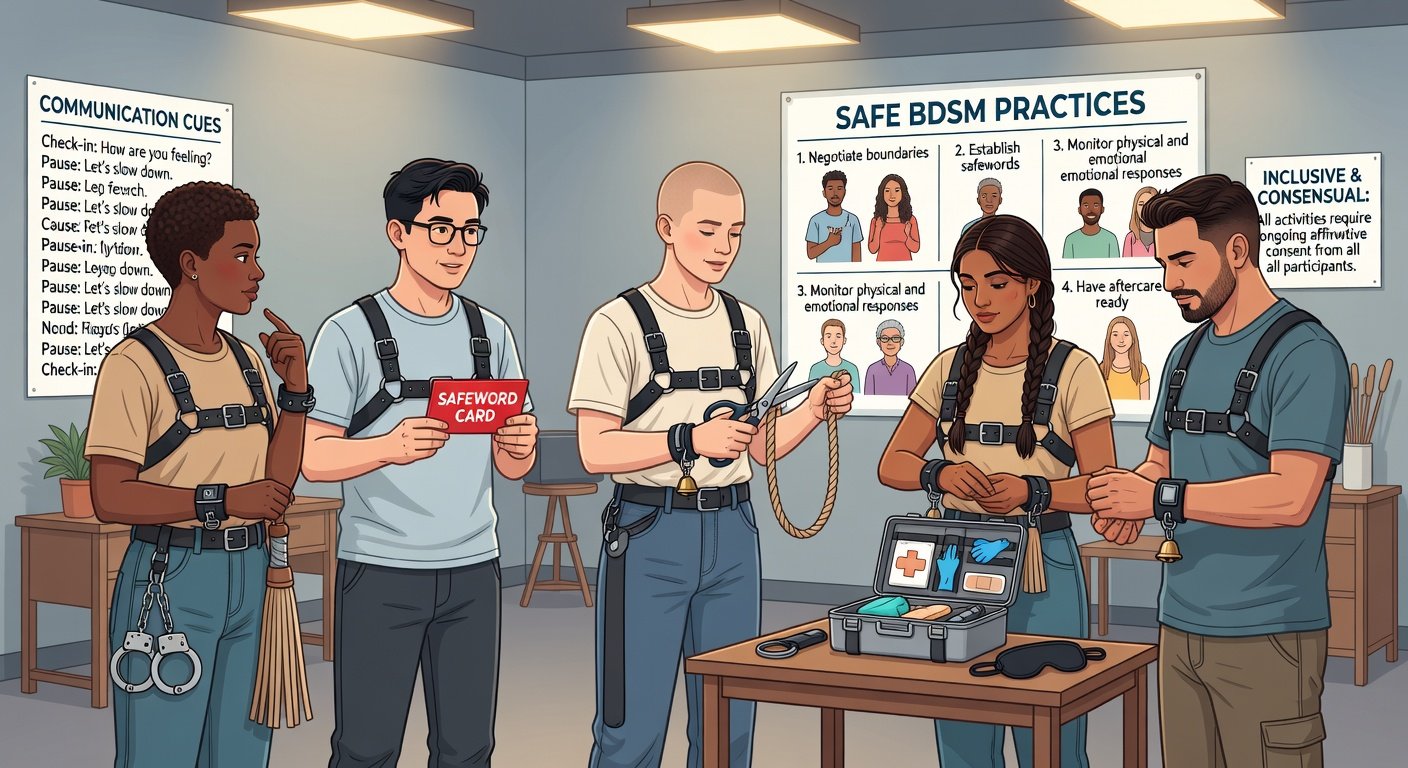
Follow this structured approach to cover all critical elements comprehensively. First, select a neutral, private setting such as a quiet café or living room where both individuals feel comfortable speaking openly without time pressure. Begin by sharing desires and fantasies to establish positive energy and common ground before addressing restrictions. Next, move into limits by defining what is off-limits entirely versus areas that require caution. Outline specific activities, tools, duration, and safe words or signals that will be used throughout the scene. Then incorporate aftercare planning to address post-play needs like emotional support or physical recovery. Finally, agree on a method for documenting key points if desired and schedule a debrief afterward. Each step should allow ample time for questions and adjustments, ensuring no one feels rushed into decisions.
Identifying Hard and Soft Limits
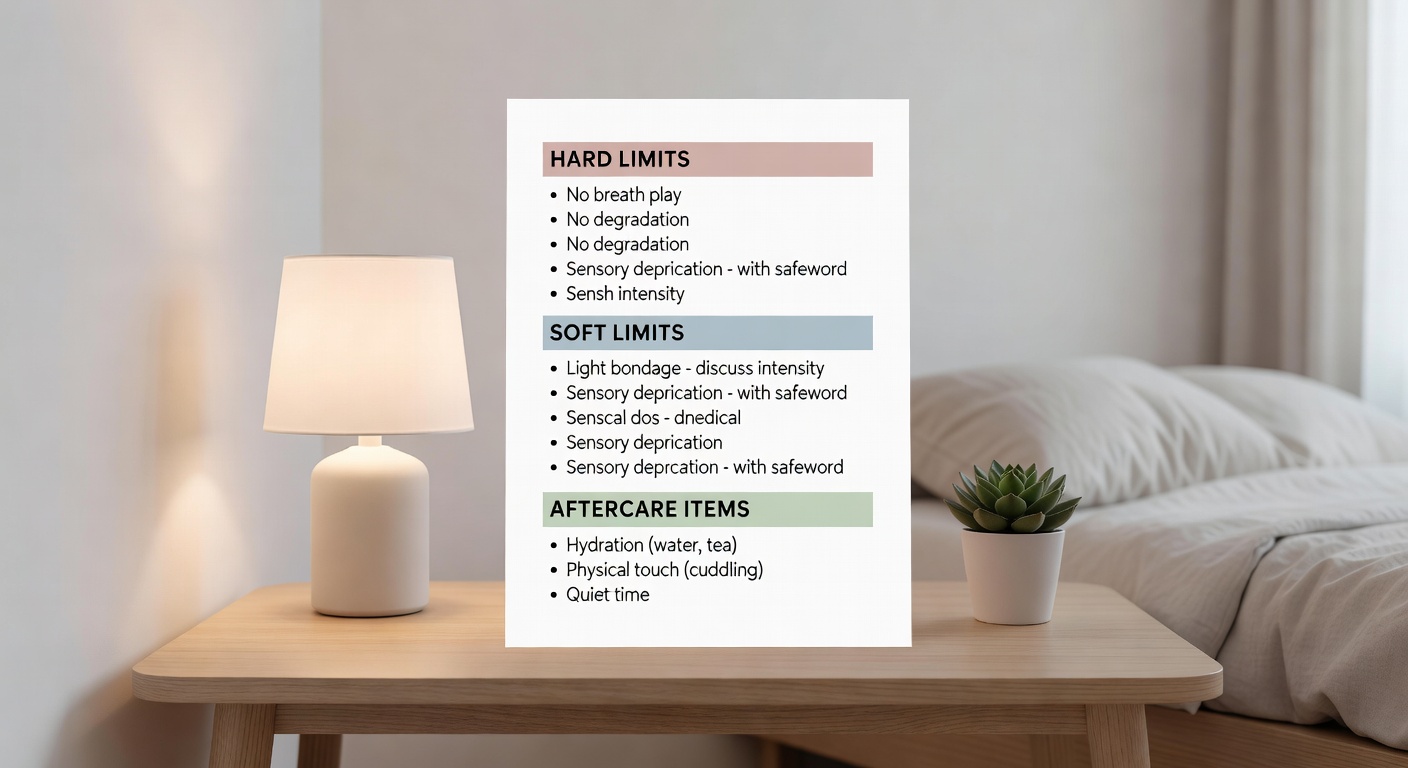
Hard limits represent absolute no-go zones that must never be crossed under any circumstances, such as certain types of pain, specific body areas, or activities tied to past trauma. Soft limits are areas open to exploration with caution or under specific conditions, like trying light bondage only if a safe word is established first. Beginners should list both categories clearly, providing concrete examples for each item to avoid ambiguity. For instance, a hard limit might be "no breath play of any kind," while a soft limit could be "impact play on thighs only after checking in." Partners benefit from ranking intensity levels on a scale and revisiting these lists periodically as comfort evolves through experience. This process helps identify patterns, such as triggers related to certain sensations or power dynamics.
Incorporating Aftercare Planning Early
Aftercare addresses physical and emotional needs post-scene, ranging from hydration and blankets to verbal reassurance or space for processing feelings. Discuss preferences such as cuddling, favorite snacks, or quiet time during negotiation to ensure seamless transition from play to recovery. Beginners often underestimate how intense scenes can affect mood hours later, making early planning vital. Examples include agreeing on a specific playlist for winding down or designating a safe contact person for check-ins the next day. This phase reinforces that care extends beyond the scene itself and strengthens the overall dynamic between partners.
Using Checklists Without Over-Reliance
Checklists provide a comprehensive starting point for covering activities and boundaries, helping beginners avoid forgetting important topics amid excitement. However, treat them as conversation starters rather than rigid scripts. Customize based on personal dynamics, adding or removing items as conversations reveal unique preferences. Over-reliance can make interactions feel mechanical, so balance structure with organic dialogue. Many find it helpful to review checklists separately first, then discuss highlights together to build rapport.
Practical Negotiation Scripts
Example opening: "Before we begin, let's talk about what excites us and any hard stops. My hard limits include anything involving blood or permanent marks. What about you?" This invites reciprocal sharing and keeps the tone collaborative. A follow-up script for limits might sound like: "On a scale of one to ten, how do you feel about light spanking? I'd like to try it but only if we use the traffic light system." For aftercare: "After the scene, I usually need ten minutes of quiet holding. Does that work for you, or do you prefer something different?" These examples demonstrate how to blend questions with personal disclosures to encourage openness without interrogation.
Comparing In-Person and Written Approaches
In-person talks allow immediate clarification and nonverbal cues like body language that reveal hesitation or enthusiasm. Written methods, like shared documents or messaging apps, offer time for reflection and create a permanent record that can be referenced later. Many couples combine both for thoroughness, starting with writing to list initial thoughts then discussing in person to add nuance and address emotional undertones. Written approaches suit those who process information slowly or prefer avoiding real-time pressure, while in-person builds immediate connection. The choice depends on individual communication styles and the complexity of the planned scene.
Common Mistakes Beginners Should Avoid
- Rushing through limits without providing specific examples, which leads to vague agreements that fail during play.
- Ignoring emotional aftereffects by focusing only on physical safety, overlooking potential drops in mood hours later.
- Assuming consent carries over from previous scenes without fresh confirmation each time.
- Skipping safe word confirmation or failing to practice signals beforehand.
- Neglecting to discuss power exchange dynamics or aftercare when one partner has more experience.
- Allowing excitement to override thoroughness, resulting in overlooked triggers or mismatched expectations.
Frequently Asked Questions
How long should negotiation take?
Allow at least 30-60 minutes for initial discussions, with follow-ups as needed depending on scene complexity. Rushing often leads to incomplete coverage of important details.
What if a partner changes their mind mid-negotiation?
Respect any withdrawal immediately and revisit later without pressure. Consent can be revoked at any point, and healthy dynamics honor that fully.
Are there resources for further learning?
Explore Planned Parenthood for consent basics and Psychology Today for kink-aware therapists who can provide personalized guidance.
How do I handle differing experience levels?
The more experienced partner should slow down explanations and avoid assuming knowledge, while the beginner should feel empowered to ask clarifying questions repeatedly.
What if limits change during the scene itself?
Use established safe words or signals right away to pause and renegotiate on the spot, treating any shift as valid without judgment.
Conclusion
Mastering scene negotiation empowers beginners to engage in BDSM with confidence and care. Prioritize open dialogue, respect all boundaries, and view negotiation as an ongoing practice that enhances intimacy and safety across every encounter.

No comments yet. Be the first!